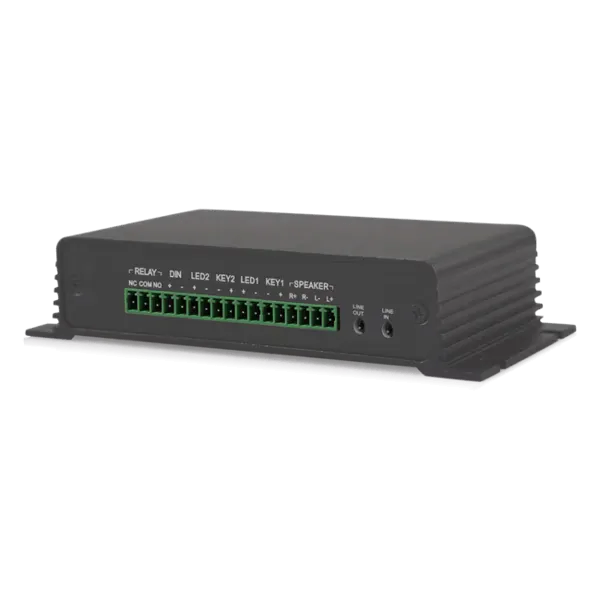
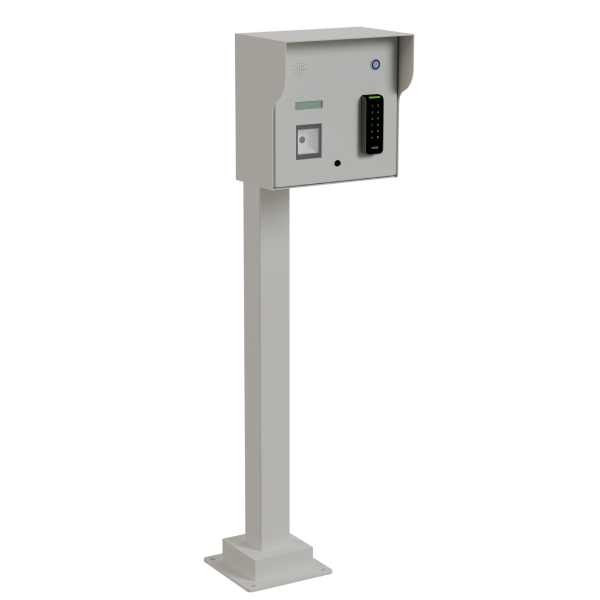
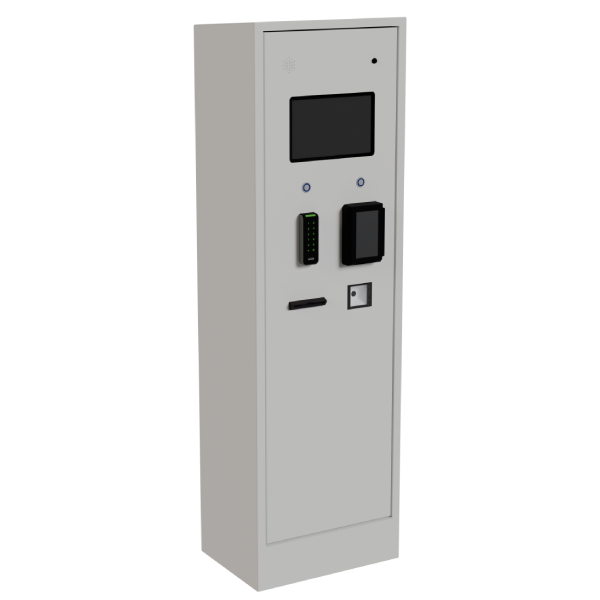
The website documents Memphrémagog, Lac-Mégantic and Sépaq Mont-Mégantic projects. Use their published project scope to select a relevant operating reference.
Estrie and Sherbrooke
Parking and access systems in Estrie
Prepare parking and controlled access in Sherbrooke, Magog, Lac-Mégantic and the wider Estrie region with Lexoh kiosks, access equipment and Security Center software. Define the property’s users, payment rules and existing equipment, then establish installation and service responsibilities for the site.

Make the buying decision
Choose the rights to check at each entrance
Choose between a parking workflow and a recreational-access programme before specifying equipment. Urban commercial properties may need permits and paid stays; seasonal waterfront sites may also need locally defined wash validation or launch permissions. Review each right separately even when one kiosk serves several tasks.
| Property or project | Operating requirement | What to verify |
|---|---|---|
| Sherbrooke commercial property | Recurring users and public visitors | Separate permit, payment and assistance requirements. |
| Magog-area waterfront access | Launch permission and accepted wash proof | Use the programme owner’s current rules. |
| Lac-Mégantic regional sites | Several entry points and user groups | Define shared rights and responsibilities by site. |
| Seasonal or park entrance | Opening periods and occasional visitors | Prepare reopening checks and arrival instructions. |
Operating example
Keep seasonal access simple for guests and operators
A recreation property may need day access, longer stays, seasonal permits and service access on the same lane. These are different rights even when they use the same barrier. Lexoh lets the operating plan connect permissions, selected credentials and payment equipment to the actual arrival experience. The design should explain what happens at opening, during a stay, at expiry and after the public season closes.
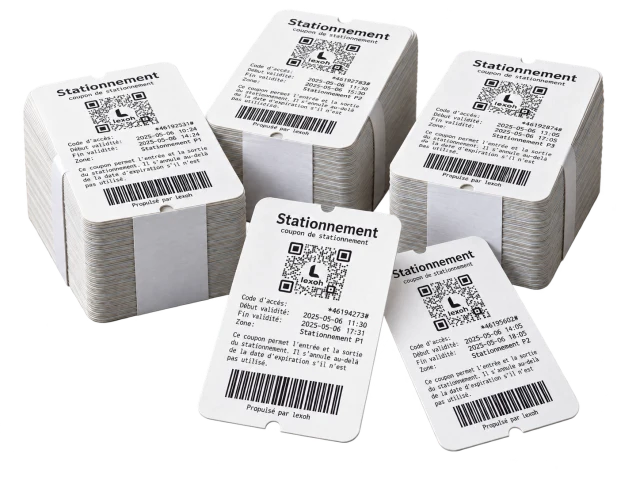
- A seasonal user receives a right with defined dates and zones. A day visitor follows the configured purchase or temporary-access journey rather than receiving a permanent shared code.
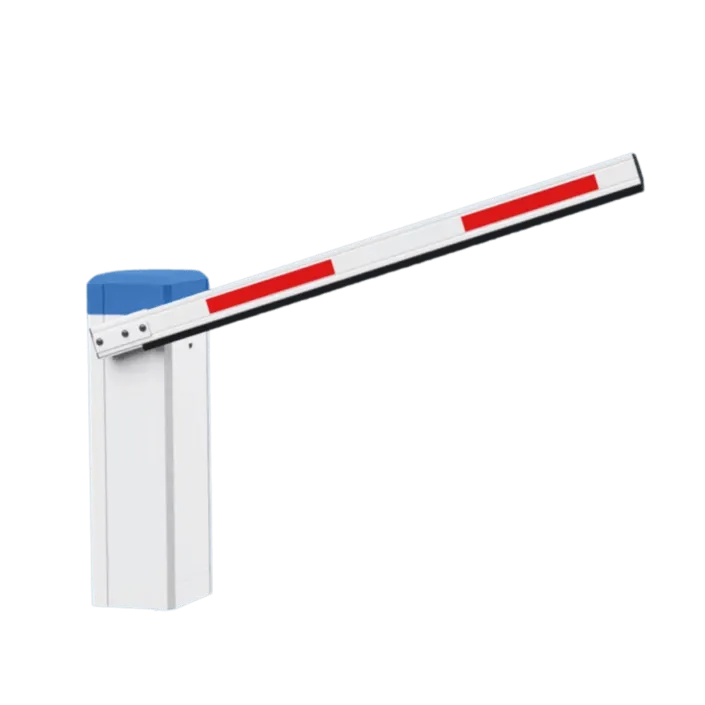
- At arrival, the credential is checked against the configured permission. The lane plan leaves room for vehicles to stop, request assistance and leave after a refusal.
- At expiry or seasonal closure, public rights end while authorized maintenance access remains separate. Reopening includes equipment checks and a review of the new season’s permissions.
01
Learn from the Memphrémagog operating model
The documented MRC de Memphrémagog project combines wash stations and boat-launch sites with payment, radio-frequency identification (RFID) cards, QR codes, barriers and cloud management. Its Ayer’s Cliff scope also includes a parking facility and an exit barrier. These examples help separate parking, washing and launch rights in a regional brief.
- Identify which rule is checked at each stop.
- Assign responsibility for issuing and correcting access rights.
- Use confirmed project details without assuming identical municipal policies.
02
Translate the reference to a commercial or campus site
A Sherbrooke office or campus requires its own user and lane design; a waterfront network is not a template for its tariffs or credentials. Describe staff, students, tenants and public visitors, then choose access, permits and payment functions relevant to that property.
- Compare the actual arrival mix and operating hours.
- Use the university, office or municipal solution page for the core workflow.
- Identify any existing equipment to inspect for reuse.
03
Agree the installation calendar and service scope
For seasonal sites, schedule site preparation, commissioning and operator training before opening. For occupied properties, agree temporary access during work. Confirm travel, local intervention contacts and the support hours included for each address.
- Provide power, network and drainage information.
- Assign reopening and periodic inspection tasks.
- Test assistance and expiry as well as normal entry.
04
Keep an occupied property usable during the changeover
For an illustrative Sherbrooke property with staff permits and paid visitors, separate the equipment change from the transfer of active rights. Agree a temporary arrival route with the site team, test the proposed configuration and identify the person authorized to switch operation. A waterfront project needs a separate check of launch and wash permissions.
- List retained devices, new devices and the supported interface for each connection.
- Test an active permit, an expired permit, a paid visit and a request for assistance.
- Define the acceptance record, staff training and return-to-service conditions before the work begins.
05
Give each user the right way to enter
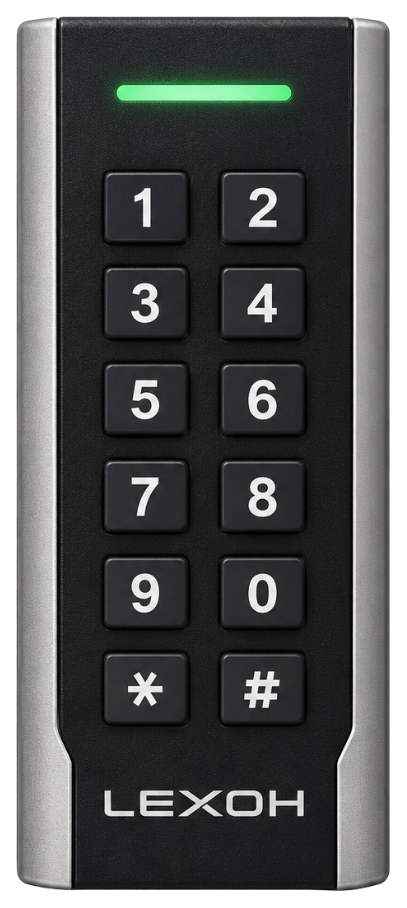
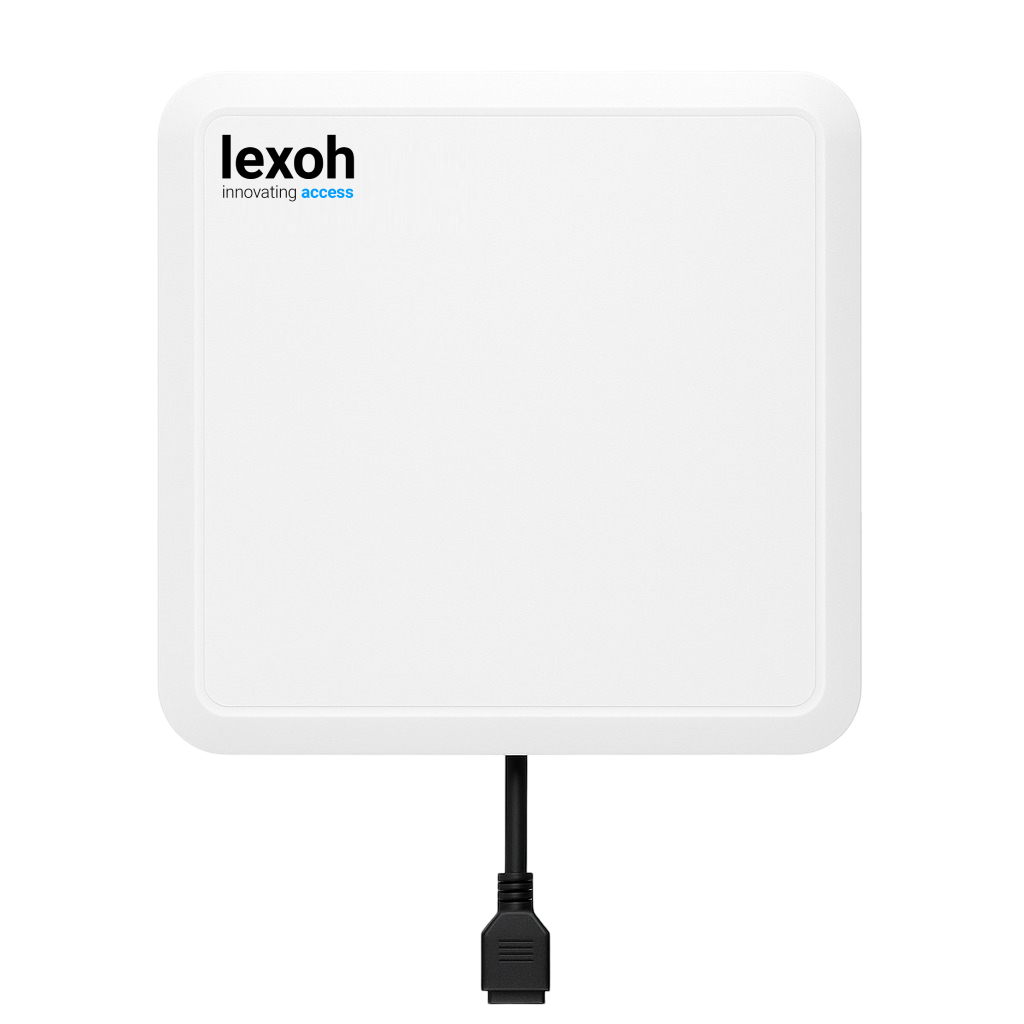
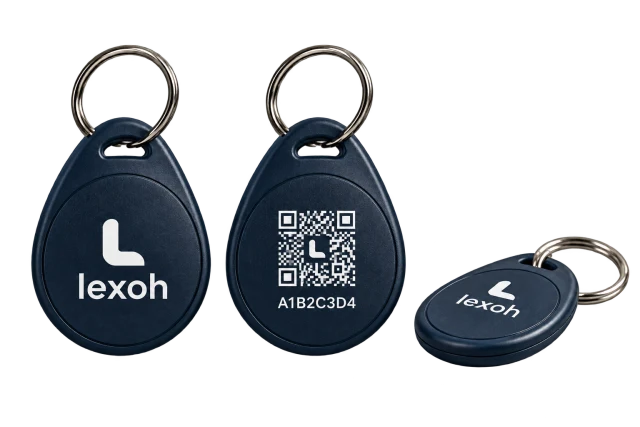
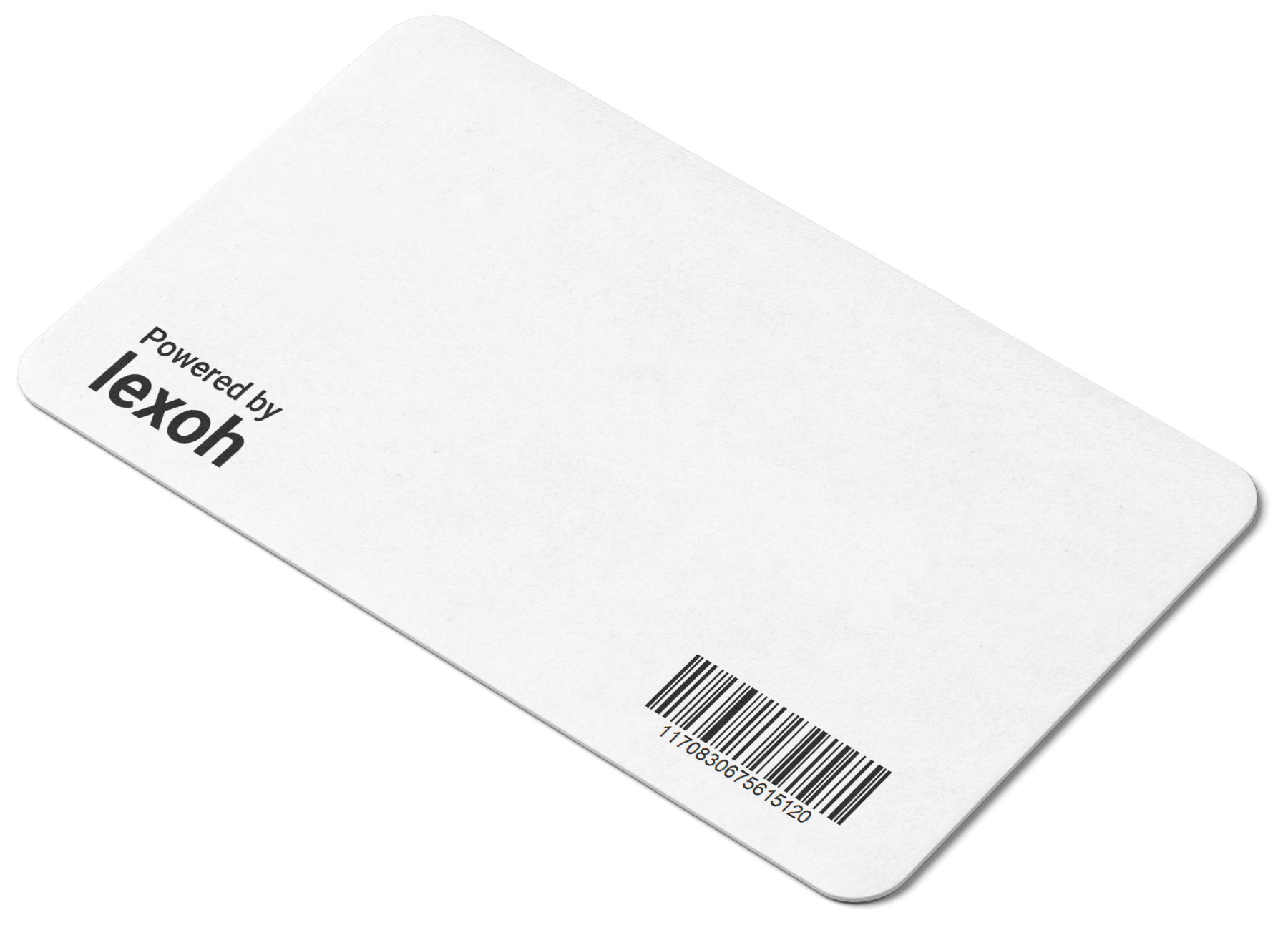
Give regular users a card or vehicle credential and temporary visitors a time-limited access method. Lexoh connects RFID, UHF, QR or plate recognition to the permissions for the correct entrance. Reader compatibility, camera position and the lane layout determine which options fit your site; Security Center keeps the access event available to the operating team.
- Match the card or vehicle credential to the supported reader, not just the term “RFID”.
- Test approach angle, stopping position and adjacent-lane reads using actual vehicles.
- Define replacement, expiry and operator-assisted access before issuing credentials.
06
Modernize access while assessing what can stay
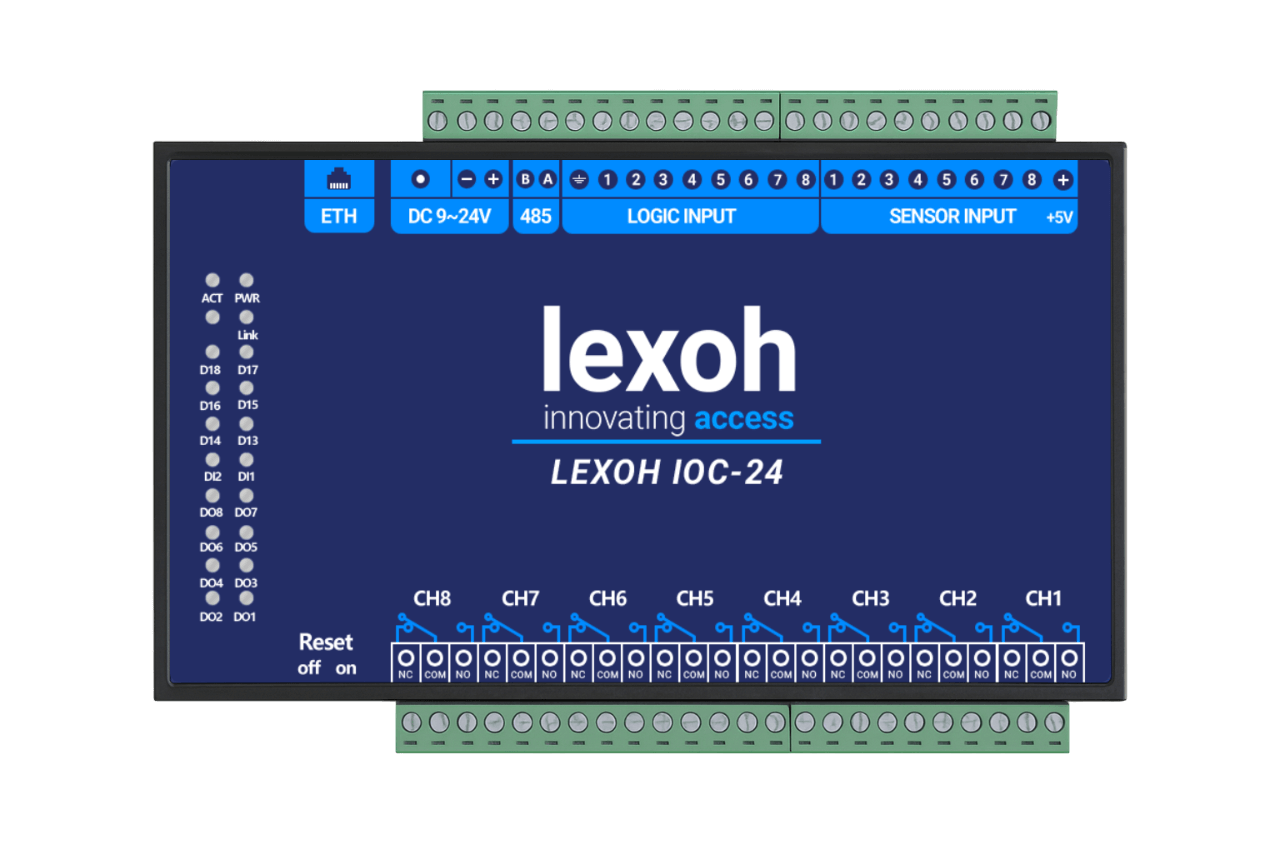
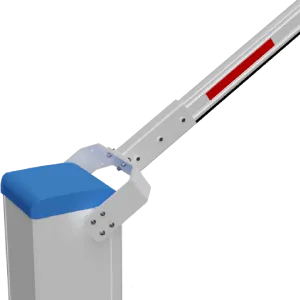
Bring existing equipment into the review before replacing the whole entrance. Lexoh assesses the barrier, controller, readers and connections for reuse with the new access workflow. Your proposal distinguishes retained equipment, new devices and installation work, helping you compare a staged upgrade with replacement. The selected equipment must still meet the lane’s operating and safety requirements.
- Photograph nameplates and controller connections before selecting replacement readers.
- Plan a temporary operating procedure for the changeover.
- Accept the complete vehicle journey, including detection and assistance, rather than testing the opening relay alone.
07
Manage in the cloud, keep local devices connected offline
Supervise sites and access records through Lexoh Security Center while a local mesh network supports communication between site devices during an internet interruption. The installed controllers and configured permissions define the offline access workflow. Commissioning tests cover interruption and recovery; electrical backup and payment-provider authorization are planned separately.
See the platform architecture →08
Installation, training and support in Estrie
Bring equipment, software and the operating team into one delivery plan. Lexoh serves projects across Canada, with installation responsibilities and support arrangements defined for your address. Training covers everyday permissions, access refusals and authorized remote commands. The proposal identifies the contractor, preparation work, service hours and on-site responsibilities so your team knows how the system will be installed and supported.
- Include photos, a lane plan, opening hours and the expected vehicle types in the project brief.
- Separate hardware, software, recurring services and installation in the proposal.
- Record acceptance results and the local assistance procedure before handover.
Connect the equipment and the operating software
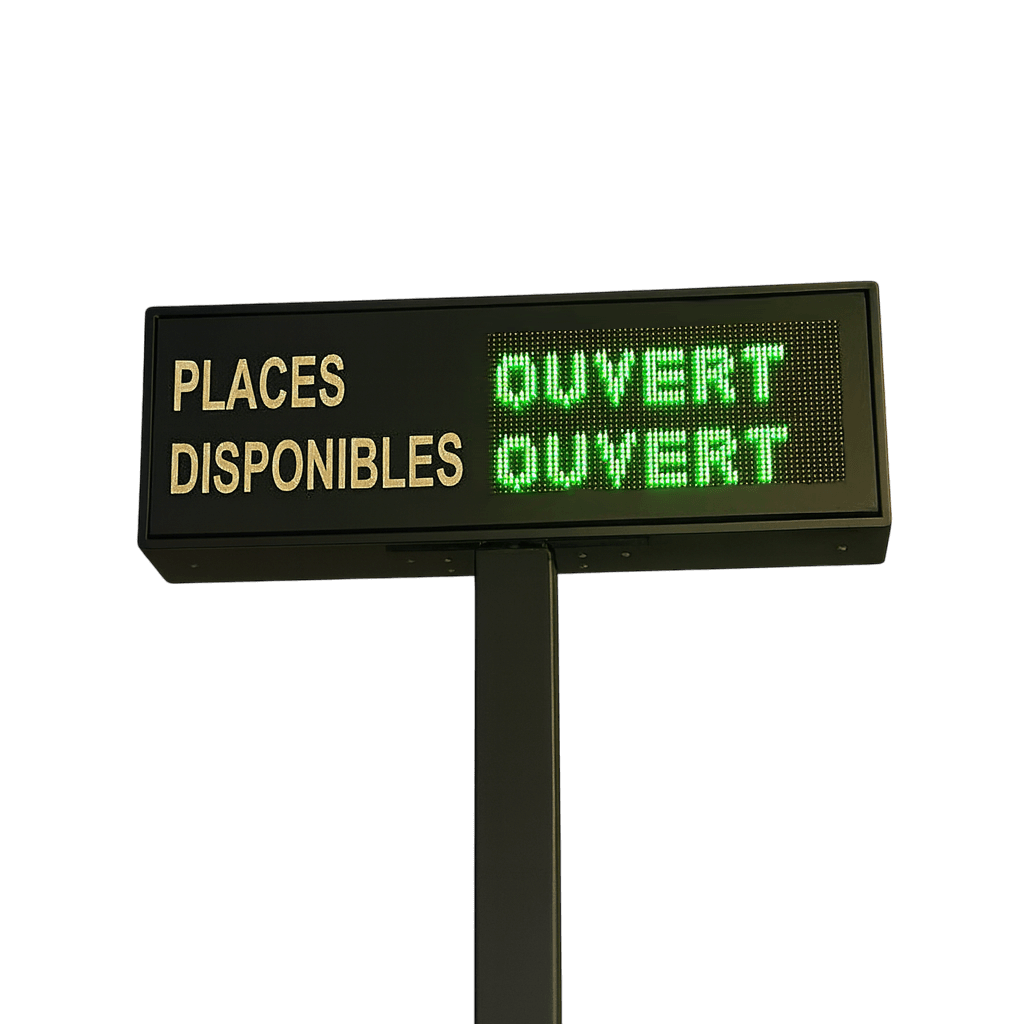
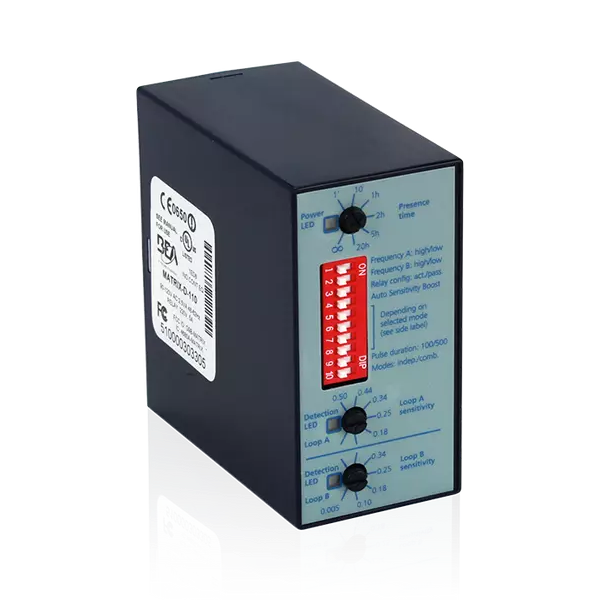
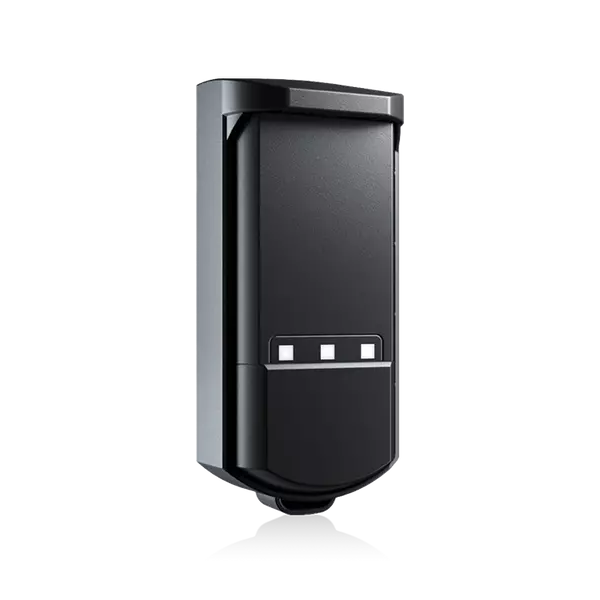
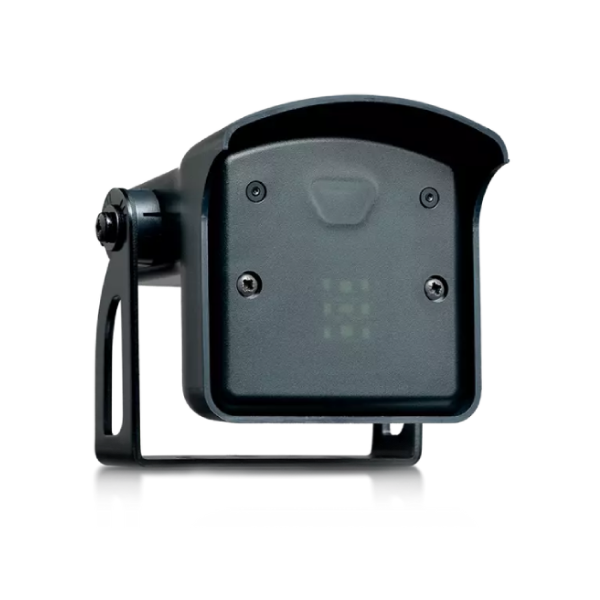
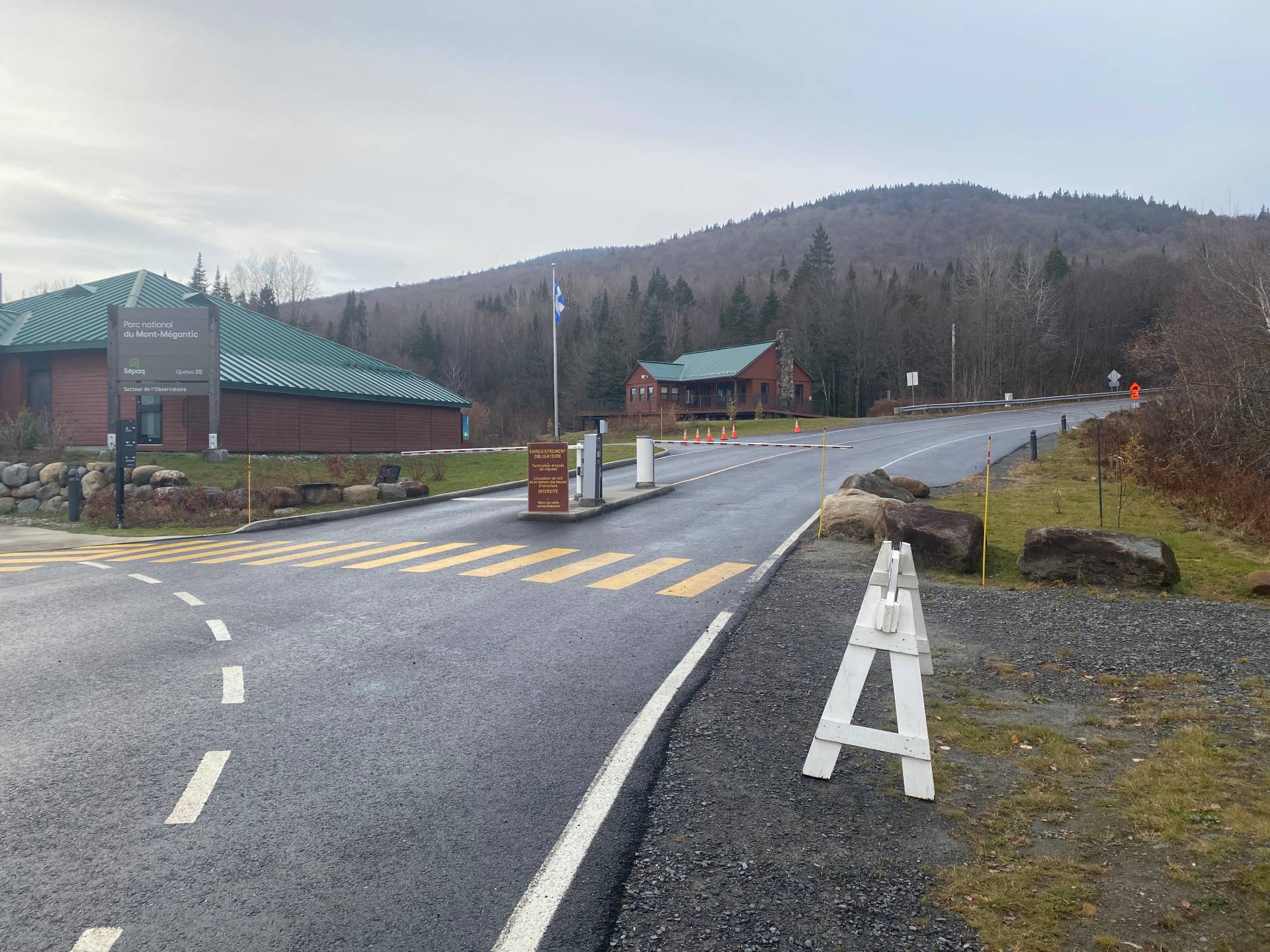
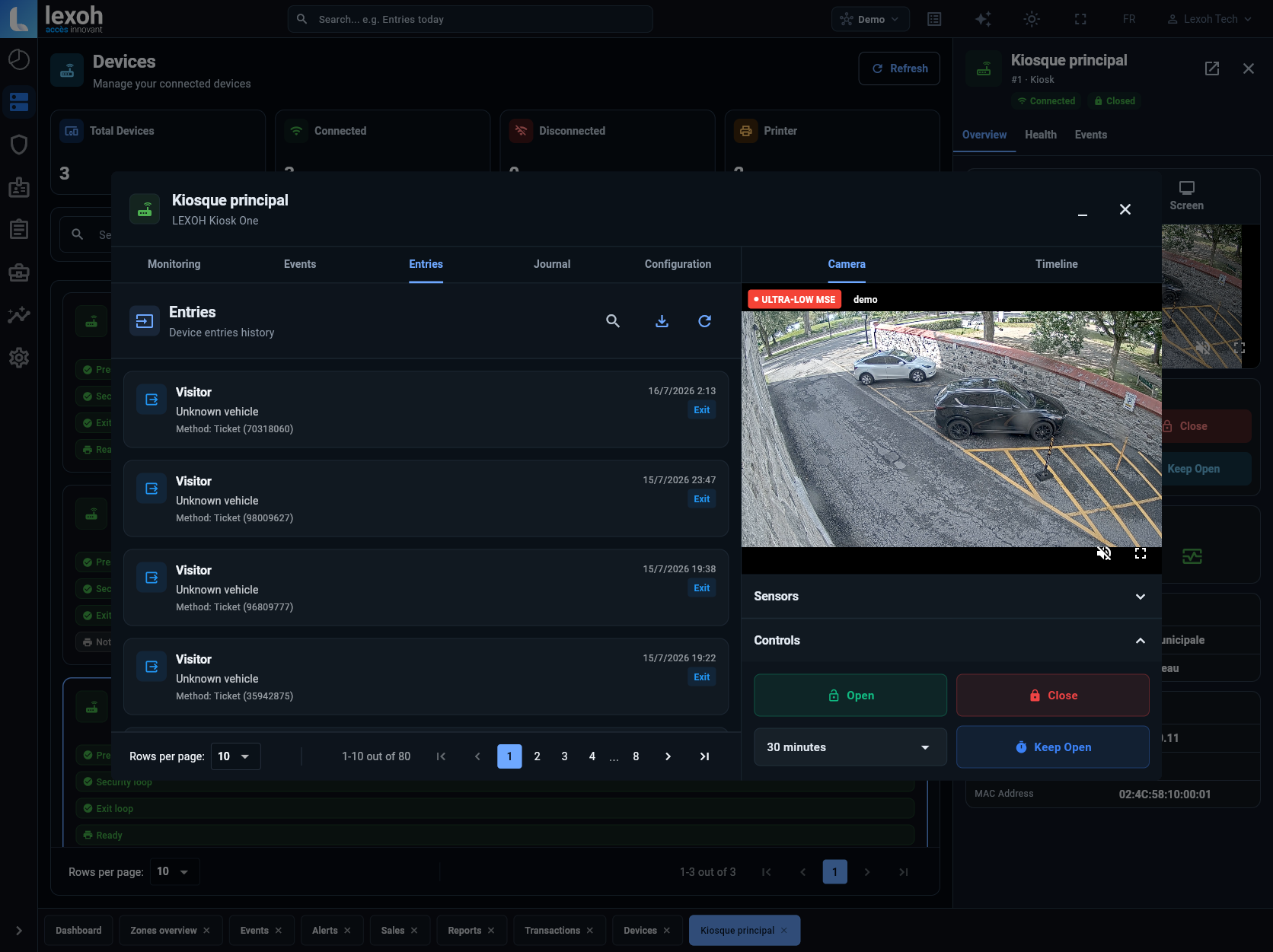
The opening photograph shows the kiosk and barrier at Sépaq Mont-Mégantic. Memphrémagog is a separate regional reference covering washing, launch access and parking. Compare those installations with your required equipment, then use the Security Center illustration to discuss the device view and controls operators need at your site.
Planning questions — Estrie
Assign equipment inspection, cleaning, network checks and credential renewal before opening. Test a first visitor, an expired credential and the assistance path. Name the local contact responsible for resolving a blocked entrance.
Potentially, when the programme’s rules and selected configuration support it. Define the rights separately, including validity and accepted wash proof, then verify the intended decisions at each entrance.
Identify each barrier model, controller, connection and condition. Define how the proposed software or access controller would command it, then verify the supported interface and complete the agreed tests. A working barrier is not by itself proof that the new system can control it.
Lexoh uses a hybrid architecture: cloud management plus an offline mode, with a mesh network that lets site devices communicate without internet. The site design also covers equipment power, payment connectivity and remote assistance. These are separate from local device communication.
Yes. Lexoh serves Canada with parking and access software and connected equipment. Send the address and scope so the proposal can define installation, shipping, local responsibilities and support for this property.
Lane count, retained equipment, identification method, payment and intercom requirements, power and network preparation, civil work and support scope determine the proposal. A reader-only price does not represent a complete operating entrance. Send site photographs and a simple lane plan for a scoped quote.
Lexoh supports local offline operation with mesh communication between devices. The installed configuration and permitted journeys are tested during commissioning. Power loss and payment authorization are separate cases and need their own operating procedures.
Yes, the project can be scoped in phases. Identify future entrances early so conduits, controller interfaces and operating groups can be planned. Accept the first lane before repeating its configuration, and check the differences at each additional site.
Prepare your Estrie and Sherbrooke project
Send the site address, opening calendar and required parking or recreational-access rules. Include the entrance plan, power and network information so Lexoh can scope equipment, commissioning and service before opening.