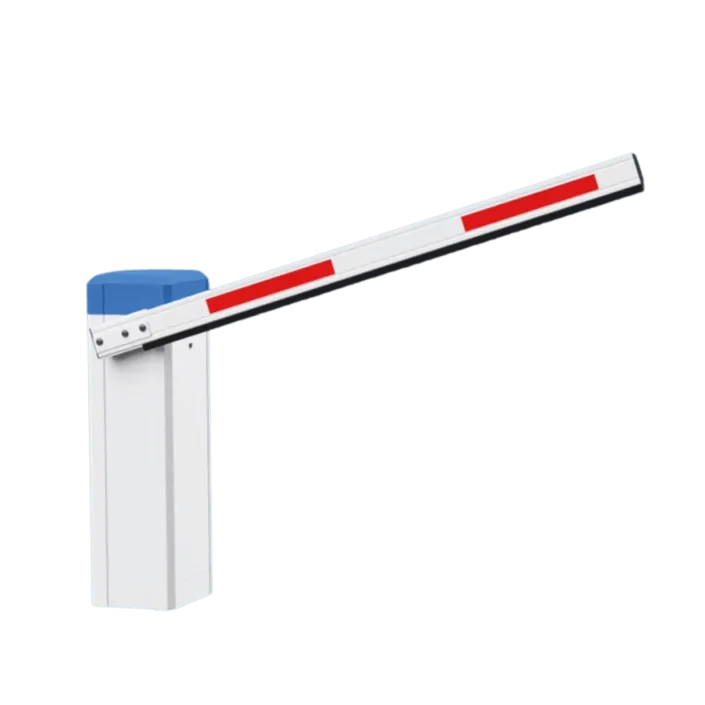
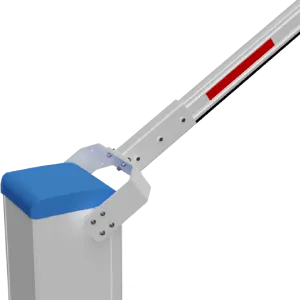
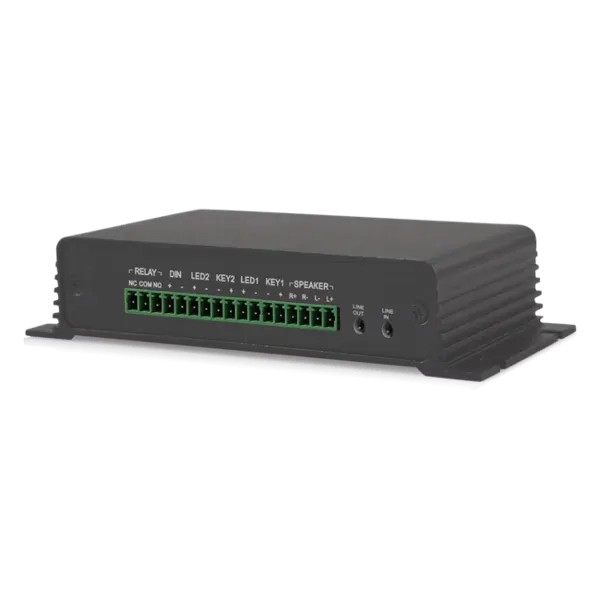
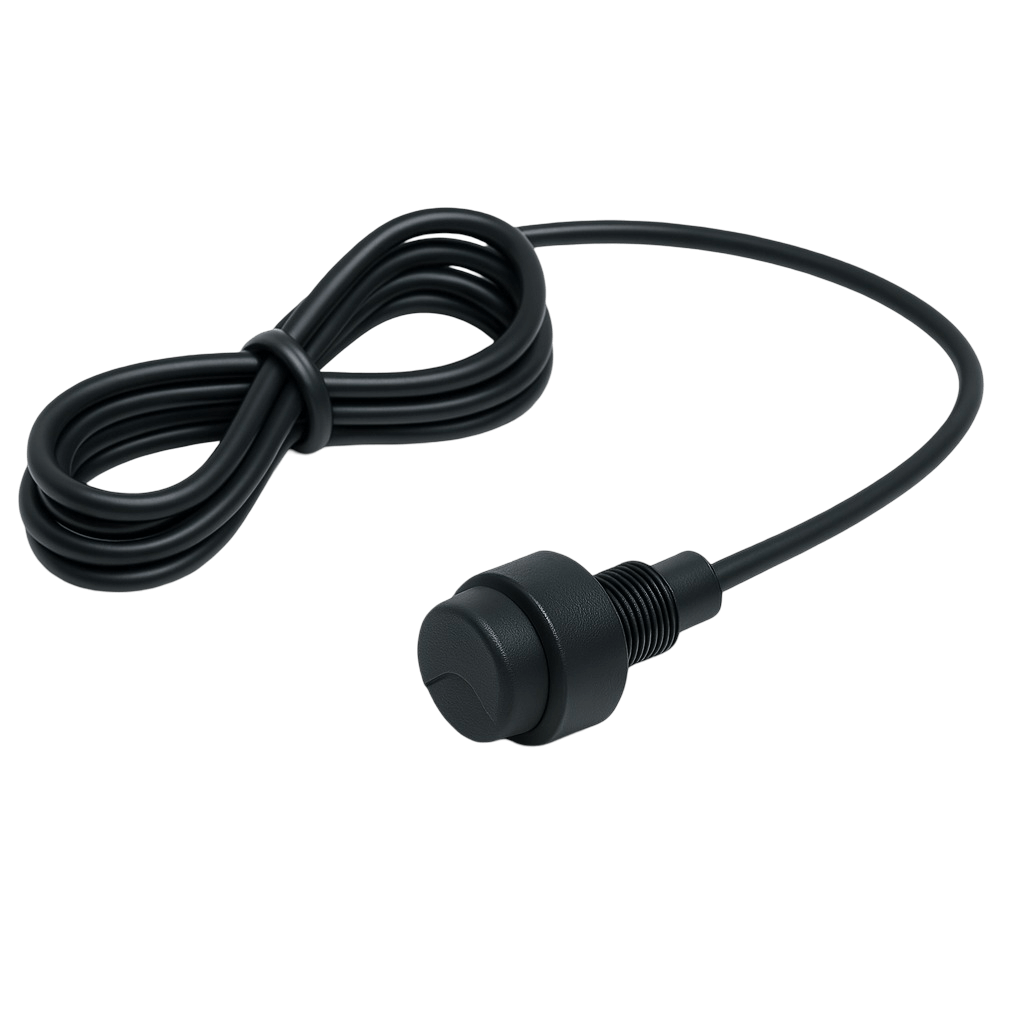
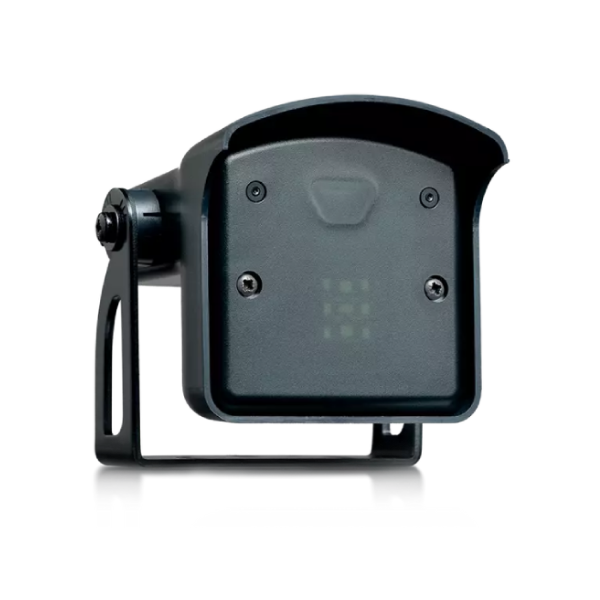
Define how the approved reader and access system handle multiple credential observations before commissioning. Test the relevant case, such as two tagged vehicles near the read zone, and confirm which lane and access response each observation can affect. Do not assume that the first identifier received always belongs to the vehicle that should enter.
Readers and credentials
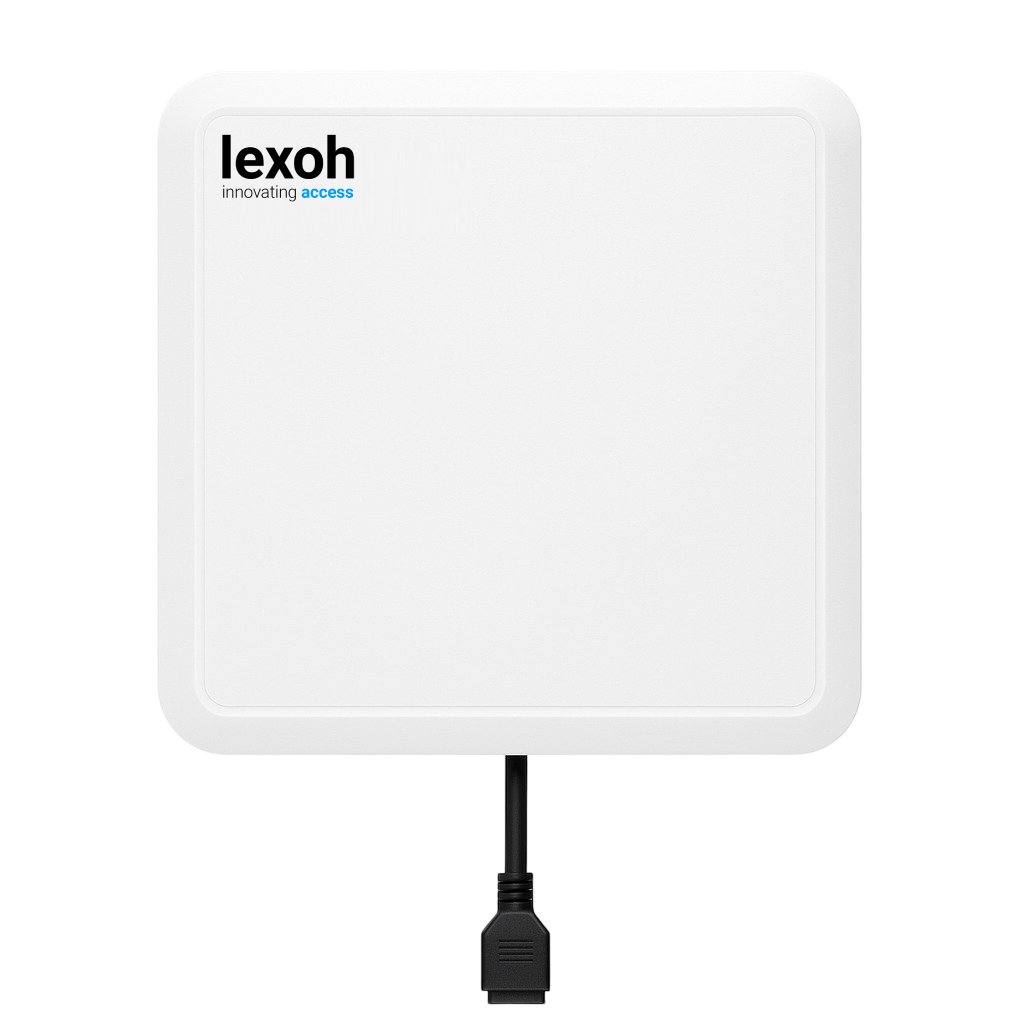
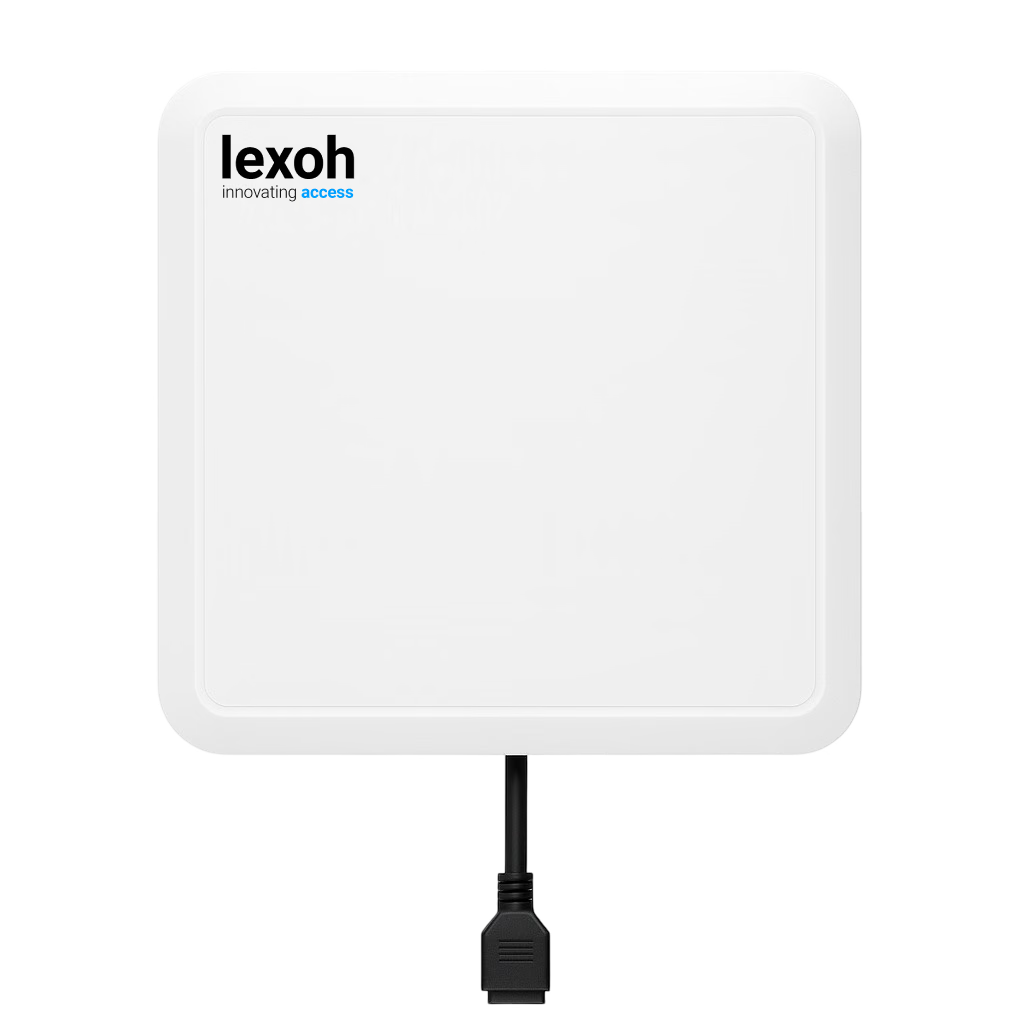
Lexoh UHF9DBI long-range RFID reader
The Lexoh UHF9DBI is a 902–928 MHz RFID reader with an integrated 9 dBi circularly polarized antenna. It identifies compatible vehicle tags at up to 15 metres, depending on the tag and installation conditions. The connected access control system checks that credential’s permissions before commanding the parking barrier or other entrance equipment.
- Interaction
- UHF tag credential
- Frequency
- 902–928 MHz
- Tag protocol
- EPC Gen2 / ISO 18000-6C
Vehicle identification and access
How does a UHF reader control vehicle access?
The reader supplies an identifier; the access system applies the rules. During commissioning, check that each tag read produces the intended response in the correct lane.
Reader or vehicle tag: what is the difference?
The reader is installed at the entrance; the tag accompanies the vehicle. Their technology must be compatible, and the tag must be registered with the access rights intended for that vehicle.
How far away should a tag be read?
The published range describes the reader’s capability; your lane layout determines where tags should be read. Test reader orientation and tag placement with vehicles in the intended lane and nearby lanes. Check that a tag in the next lane does not trigger the wrong entrance.
Does reading a tag automatically grant access?
No. A tag read identifies the credential. The connected system checks its permissions and validity before issuing an access command. Test allowed and denied access, including tags in adjacent lanes, with the complete entrance.
Prepare the installation
Define the connection and equipment scope.
A reader specification is one part of the entrance design. Bring these details to the configuration review.
- Controller connection
- Identify the existing controller and proposed reader interface. Confirm the wiring and credential format together before ordering.
- Power and harness
- Confirm the delivered harness and supply arrangement against the datasheet. A mention of PoE alone does not specify the injector to use.
- Supply and installation
- List the reader, tags, mounting, wiring and configuration work required. Have the quotation identify who supplies and installs each item.
Technical specifications
| Specification | Details |
|---|---|
| Model | Lexoh UHF9DBI |
| Frequency | 902–928 MHz |
| Tag protocol | ISO 18000-6C (UHF EPC Gen2) |
| Read range | 0–15 m, depending on the tag chip and environment |
| Write range | 0–8 m, depending on the tag chip and environment |
| Read rate | More than 200 tags/second |
| Antenna | Integrated 9 dBi, circular polarization |
| RF output | Adjustable, up to 33 dBm (±1 dB) |
| Supply voltage | 9–25 V DC; 12 V nominal |
| Power consumption | 8–12 W |
| Interfaces | RS232, RS485, Wiegand, TCP/IP and USB |
| Operating modes | Active, response and trigger |
| Read confirmation | Buzzer |
| Ingress protection | IP65 |
| Operating temperature | −25 to +70 °C |
| Storage temperature | −40 to +85 °C |
| Humidity | 10–95% RH, non-condensing |
| Housing | ABS |
| Dimensions (H × W × D) | 260 × 260 × 81 mm |
| Net weight | 2.6 kg |
Specifications from the Lexoh UHF9DBI datasheet, pages 2–5. Actual read range depends on the tag and installation. The datasheet lists PoE support without an IEEE class or injector specification; confirm the power configuration before installation.
Interface Wiring
| Wire Color | Connection |
|---|---|
| Red | +9V |
| Black | GND |
| Pink | RS485 A+ |
| Orange | RS485 B- |
| Brown | GND |
| White | RS232 TXD |
| Purple | RS232 RXD |
| Light Green | USB D+ |
| Blue | USB D- |
| Gray | GND |
Wire colours follow page 4 of the Lexoh UHF9DBI datasheet. The red wire is labelled +9 V; the specified DC supply range is 9–25 V. Confirm the delivered harness and power configuration before wiring.
Commissioning checklist
Record the entrance tests before handover
Agree on the expected response with the site operator and installer, then record the observed result for each test. Use representative vehicles and the tags selected for this entrance.
| Test scenario | What to check and record |
|---|---|
| Vehicle and tag samples | For each vehicle type, record the tag model, placement and reader settings used. Check the observed reading position against the agreed stopping or approach point. |
| Neighbouring vehicles | Include tags in adjacent lanes and waiting vehicles. Record which identifier was received and which entrance responded; investigate any response outside the intended lane. |
| Permission changes | Test an authorized credential, a refused credential and a credential whose permission has been revoked. Record the access decision and observed entrance response for each case. |
| Unreadable or missing tag | Walk through the agreed visitor or assistance process with the operator. Confirm who responds and how the vehicle reaches an authorized entry or exit route. |
| Card presentation or vehicle-tag reading | The LEXOH-RFID-OSDP reads supported 125 kHz and 13.56 MHz credentials at 2–4 cm. The UHF9DBI uses 902–928 MHz vehicle tags in a commissioned read zone. A compatible door badge is not automatically a compatible UHF tag. Identify both reader models and credential technologies before planning one credential for several entrances. |
Configuration: Keep the lane plan, controller interface, approved settings, test date and unresolved issues with the site records. The published read range is not an acceptance result for your entrance.
Equipment questions
Practical details for planning, operating and maintaining this equipment.
Provide a defined alternative suited to the site, such as another approved credential method or an assistance procedure. Explain where the driver should stop and how authorization is checked without disrupting the tagged-vehicle flow. The UHF reader does not create that alternative by itself; select and test it as part of the complete entrance workflow.
Project review
Plan UHF reading at your entrance.
Share the tag references, vehicle types, lane plan, controller model and site conditions for a configuration review.