

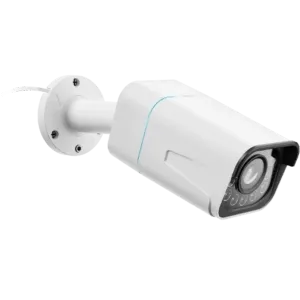
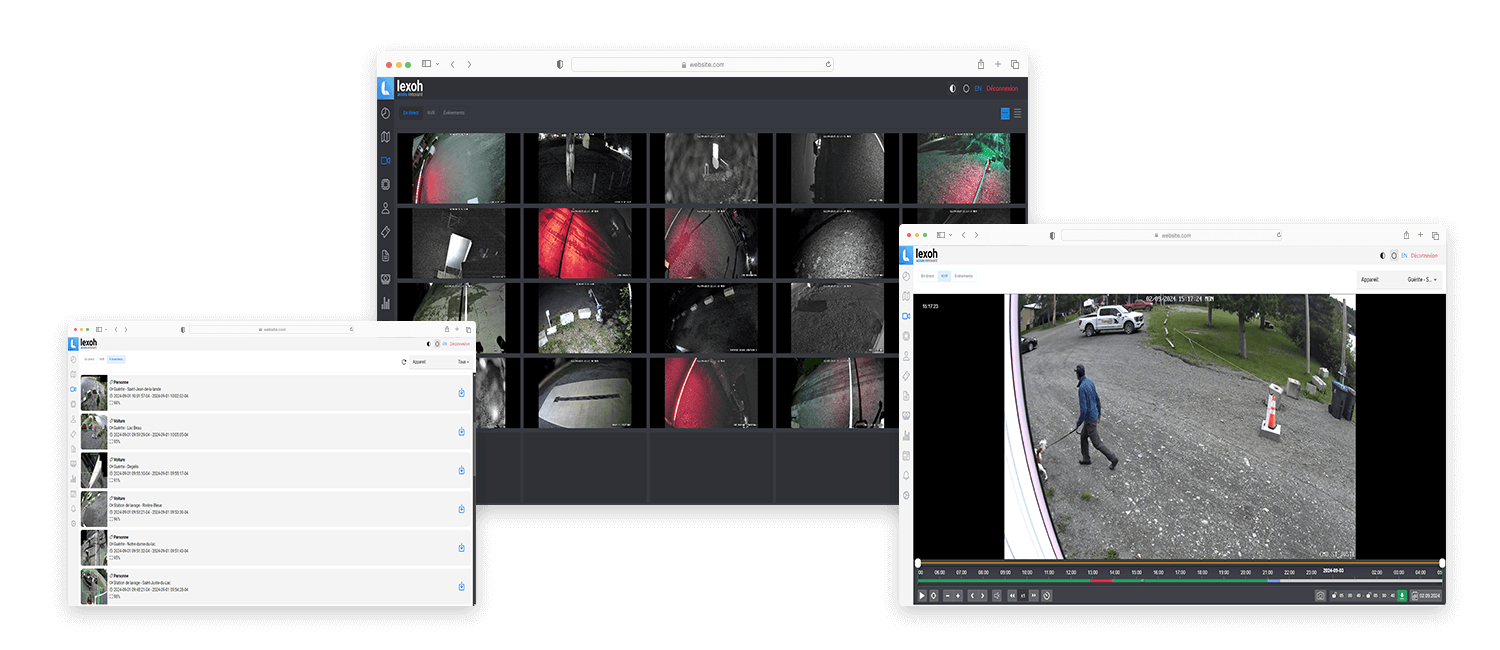
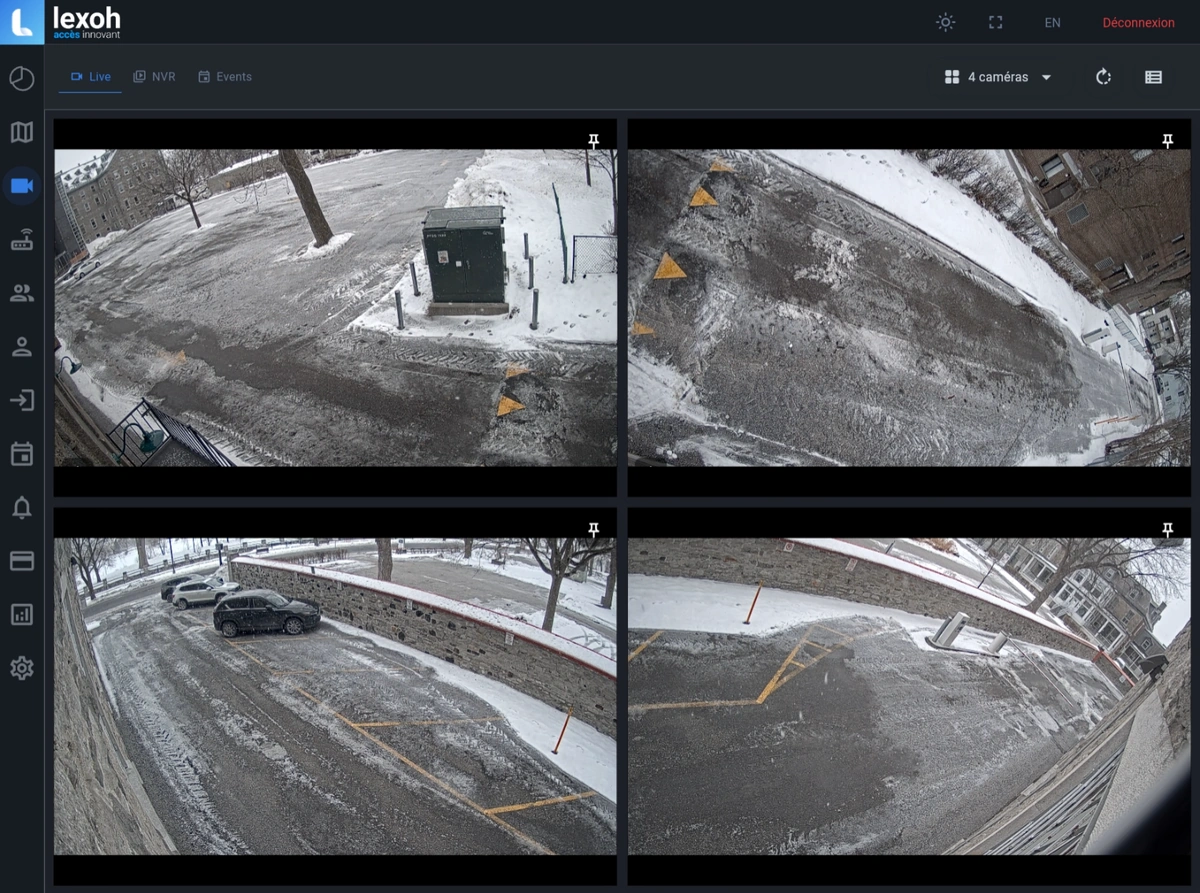
Assign viewing and recording-review permissions according to the operator’s actual responsibilities. Someone who monitors an entrance may not need access to every other area or the ability to export footage. Confirm the permissions supported by the chosen video system and test representative user accounts during handover; the camera housing does not define those access rights.
Video security equipment
Dome cameras for fixed entrance views
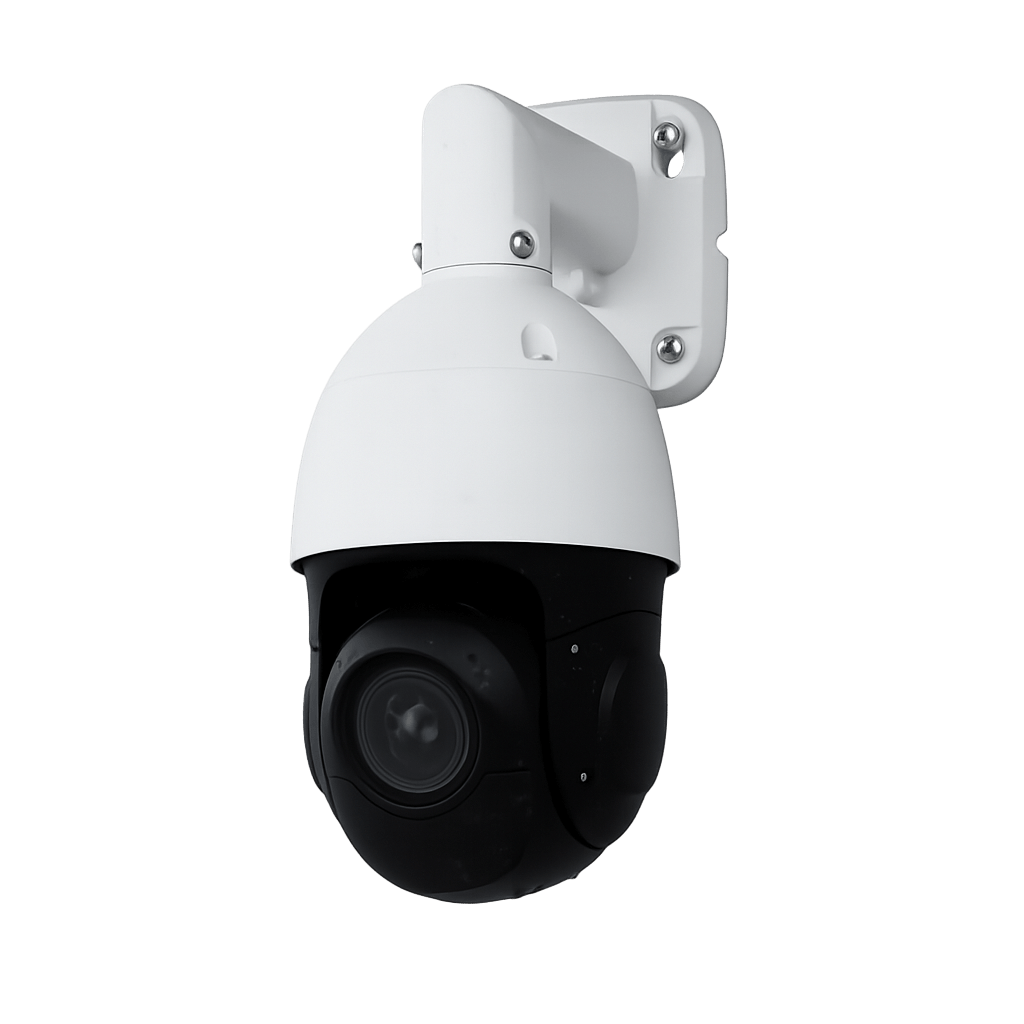
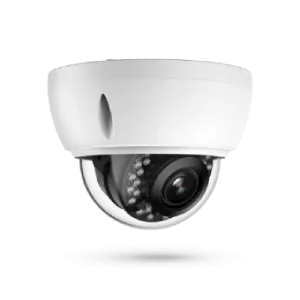
A dome housing brings the camera and lens into a compact assembly for a fixed view of an entrance or monitored area. Plan your camera layout, recording needs and operator access with Lexoh.
- Role
- Fixed video viewpoint
- Form
- Dome form factor
- Selection
- Matched to your site
View first
Choose the dome around the view and mounting surface.
The dome houses the camera and lens in a compact assembly. Its shape alone does not determine coverage, outdoor suitability or resistance to damage.
Does a dome camera see in every direction?
A fixed dome camera sees the field defined by its lens and orientation. The dome’s round shape does not mean a full surrounding view. Position the camera to cover the door, reader or waiting area that needs continuous observation.
Check the mounting and image together
The base, cable route and lens adjustment must suit the chosen surface. Check nearby lights, reflections and obstructions from the installed position, and leave access to clean the dome and inspect the image afterward.
Match the exact model to the environment
Confirm the camera’s environmental and impact ratings before specifying indoor, outdoor or exposed use. Also verify the video connection, recording system and permissions; a similar housing does not establish replacement compatibility.
Entrance monitoring
A compact housing. A deliberate view.
The dome contains the camera and lens; the installation angle determines which part of the entrance appears on screen.
-
Cover the interaction
Frame the door, reader or stopping point that needs to remain visible.
-
Keep a clear image
Account for nearby lights, reflections, obstructions and access for cleaning.
-
Review in context
Use the view within the monitoring and recording functions of the selected video system.
Dome camera selection criteria
| Selection point | What to verify |
|---|---|
| Fixed coverage | Specify the door, reader or waiting area that must stay visible. Select the lens and orientation for that scene; a dome housing does not establish all-around coverage. |
| Mounting and cable entry | Check the base, mounting surface, cable entry and room for lens adjustment against the offered drawing and accessories. |
| Reflections and low light | Inspect the installed image with nearby lights and any infrared illumination in use. Check reflective surfaces and keep the dome clear according to its maintenance instructions. |
| Environmental protection | Confirm the exact enclosure and impact ratings, operating temperature and approved installation accessories. The dome shape alone does not establish outdoor suitability. |
| Power and network | Confirm the camera’s supply, maximum power consumption, cable route and network connection before choosing the switch or injector. |
| Recording and viewing | Verify the camera and firmware with the chosen video system. Agree on recording, retention and operator access, then test live view and playback. |
Specifications are confirmed for the camera offered in your quotation. Request its current datasheet and installation drawing; no single set of numerical ratings applies to every camera of this type.
Prepare the mounting plan
Plan the view, access and upkeep together
Give Lexoh the doorway or area to cover, the mounting surface and the way operators will use the image.
| Planning item | Site information |
|---|---|
| Area to cover | Mark the door, credential reader or waiting position and the required viewing direction. Include nearby obstructions and lighting. |
| Mounting photographs | Provide photographs of the ceiling or wall, cable entry and available mounting area. Note how the installer will reach the camera for adjustment. |
| Image acceptance | Check the view after the dome is fitted, with the lighting modes the site uses. Record the approved framing and any reflections that need correction. |
| Maintenance access | Identify how the dome will be reached for inspection and cleaning. Assign the maintenance responsibility and keep the selected model’s care instructions. |
| Operator permissions | Describe who needs live viewing, recorded review and export. Test the agreed permissions in the selected video system before handover. |
Configuration: Keep the approved view, offered equipment and acceptance results in the site handover record.
Equipment questions
Practical details for planning, operating and maintaining this equipment.
Record the affected camera, the time, whether live viewing or playback failed and whether other views were available. This distinguishes the reported symptom before the installation team checks the camera, network and video system. Keep changes and recovery times in the service record rather than assuming that replacing the camera will resolve every loss of image.
Project review
Plan your camera coverage with Lexoh.
Share the scenes, operator tasks, mounting conditions, lighting and video architecture for a project-specific review.