





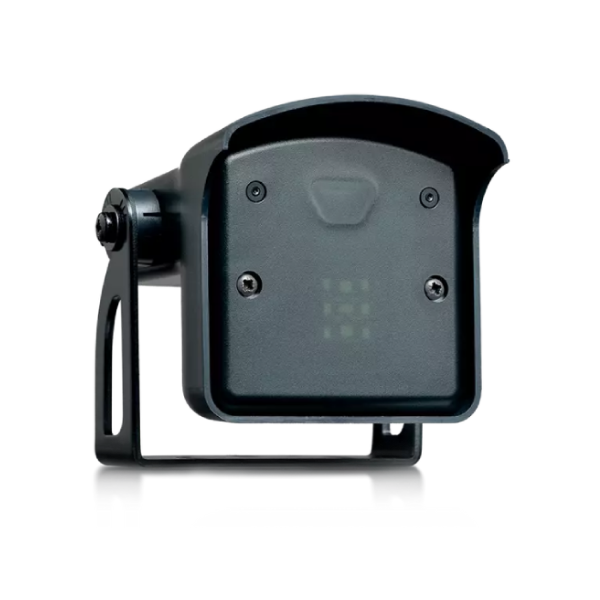
Parking violation review
Parking violation detection and operator review.
Review suspected parking violations with Lexoh. Bring available licence-plate, permit, location and time data together so your team can check a flagged event before deciding what to do.

Evidence before action
What does parking violation detection show an operator?
Parking violation detection flags a possible mismatch between an observed vehicle event and a configured parking rule. The operator needs the location, time, rule and supporting records to assess the situation.
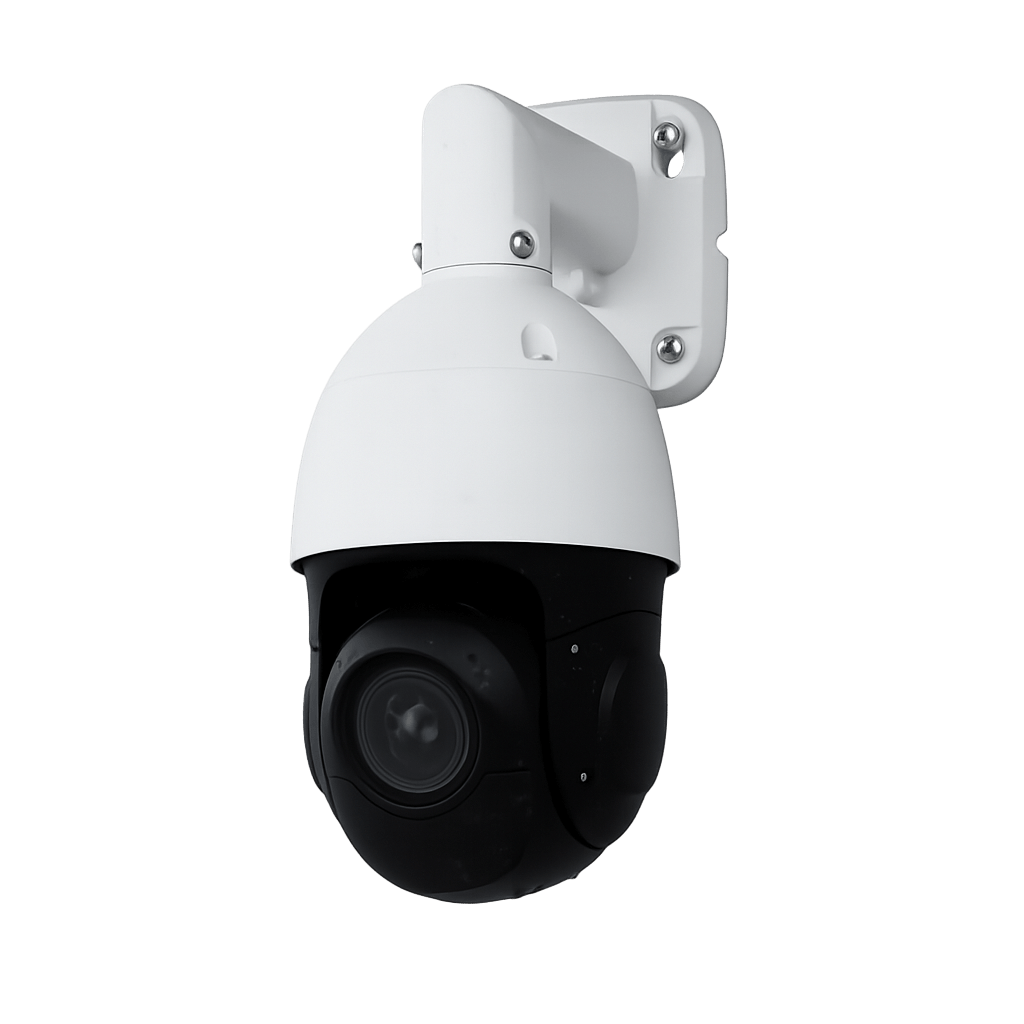
Lexoh connects compatible cameras or sensors with the parking data and event views configured for the site. Security Center helps authorized staff review the event record and associated video when available.
Capture performance, rule coverage, privacy obligations and any enforcement response depend on the site design, local requirements and approved operating policy.
Operational journey
From observation to authorized follow-up.
-
Observe
A compatible camera or sensor captures a vehicle event.
-
Compare
Configured permit, location or time data is evaluated.
-
Flag
A candidate exception appears with the available event context.
-
Review
Authorized staff verify the evidence and follow the approved procedure.
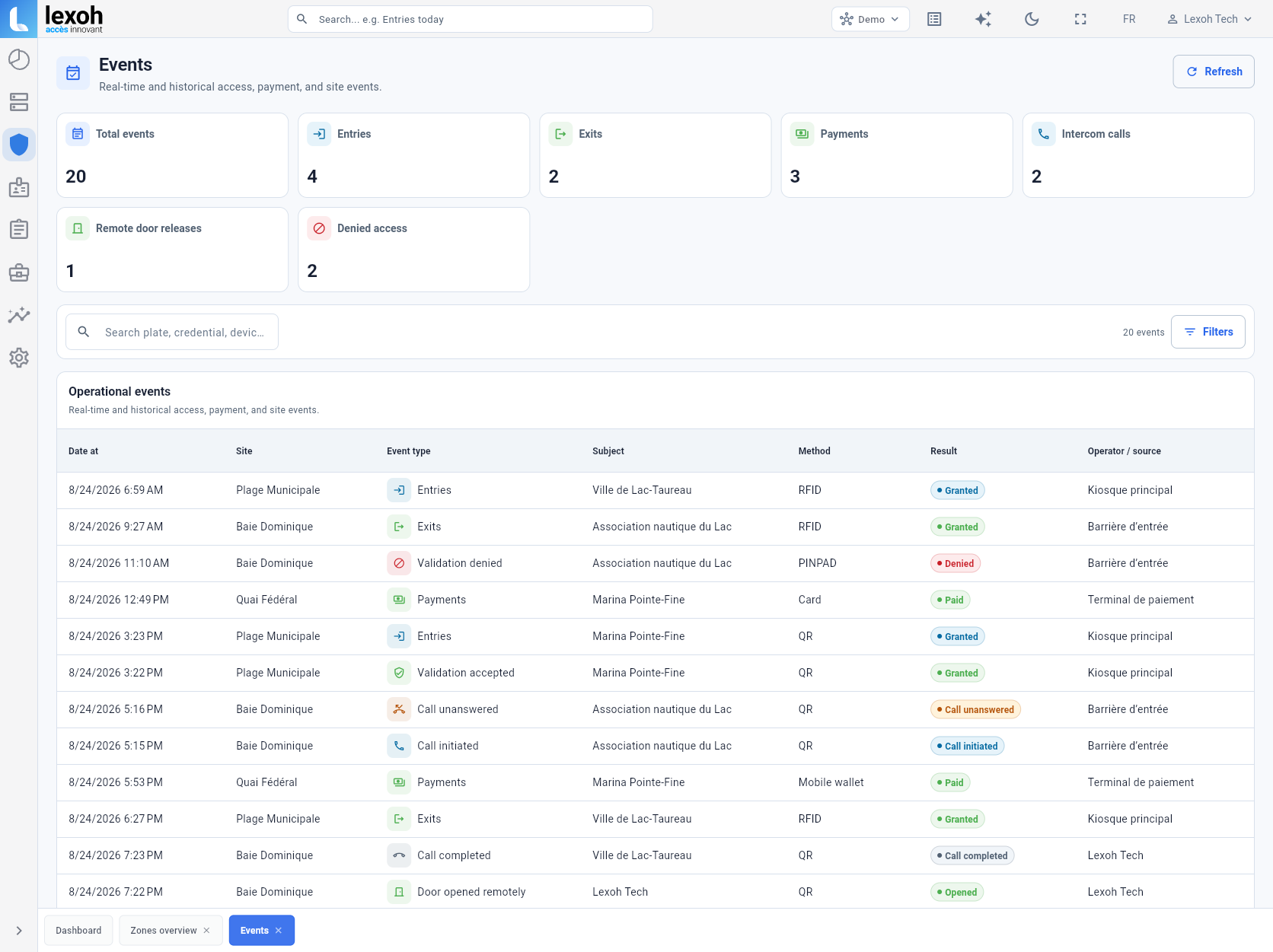 View full-size software image
 Operational register
Find the event and the records needed to review it.
Security Center can organize available parking and access events by site, type, subject and result, giving operators a consistent place to investigate.
- Search the fields available to the workflow
- Review event type and outcome
- Identify the associated site and source
- Keep operator actions in the operational record
View full-size software image Video context
Return to the moment that produced the event.
When video is available and retained by policy, event-linked playback helps an authorized operator understand the sequence before taking the next step.
- Navigate an event timeline
- Review the associated camera view
- Keep detections tied to their timestamp
- Export evidence only through authorized procedures
Parking contexts
Different rules need different evidence.
The useful observation, comparison data and response procedure change with the site and the parking rule being managed.
-
Timed areas
Available arrival and duration context for operator review.
-
Permit zones
Configured credential or plate data compared with the location.
-
Reserved spaces
Review the occupancy observation against the permission to use the space, where these data sources are connected.
-
Service areas
Location- and schedule-specific rules for loading or service access.
FAQ
Questions about parking violation detection
What information is needed to assess a parking rule?
Provide the site plan, marked zones, applicable hours, permit or payment data source and existing camera models. Identify the condition to flag, who reviews it and where the decision is recorded. Confirm the supported data connection and rule before including it in the agreed scope.
What should the acceptance test include?
Test an authorized vehicle, a candidate exception, an unreadable plate, delayed or missing permit data and a lost camera connection. Compare the captured event with the approved source records. Agree how uncertain cases are handled and who signs off on the workflow before operational use.
Does the system issue parking citations automatically?
The workflow described here flags events for staff review. Issuing a warning or citation is a separate step, governed by the site’s authorized procedure and applicable requirements. Automatic citation issuance is not part of the workflow presented on this page.
Can it work in a parking lot without a gate?
Potentially, when the site survey supports suitable camera placement, capture conditions, network access and a reliable source of permit or parking-rule data.
Will every plate be read in every condition?
No capture rate is universal. Performance depends on camera selection, geometry, lighting, vehicle movement, weather, maintenance and commissioning at the specific site.
How are privacy and retention handled?
Collection, access rights, retention and exports must be configured according to the organization’s approved policy and the legal requirements that apply to the deployment.
How should staff review a possible licence-plate misread?
Compare the reported plate with the original image when available, its timestamp and the vehicle’s position, then check the relevant permit or access record. Record any uncertainty instead of treating the text result alone as proof of a violation. An authorized reviewer should apply the site’s decision process using the available evidence and its limitations.
What should be recorded when a suspected parking violation is dismissed?
Keep the site, time, rule considered, evidence reviewed and reason for the decision in the organization’s approved review records. Identify the responsible reviewer and any follow-up, such as checking a permit record or camera view. Follow the applicable retention and access policy for the underlying evidence; the project should define where this decision record is maintained.
Design the evidence path
Plan parking violation review for your site.
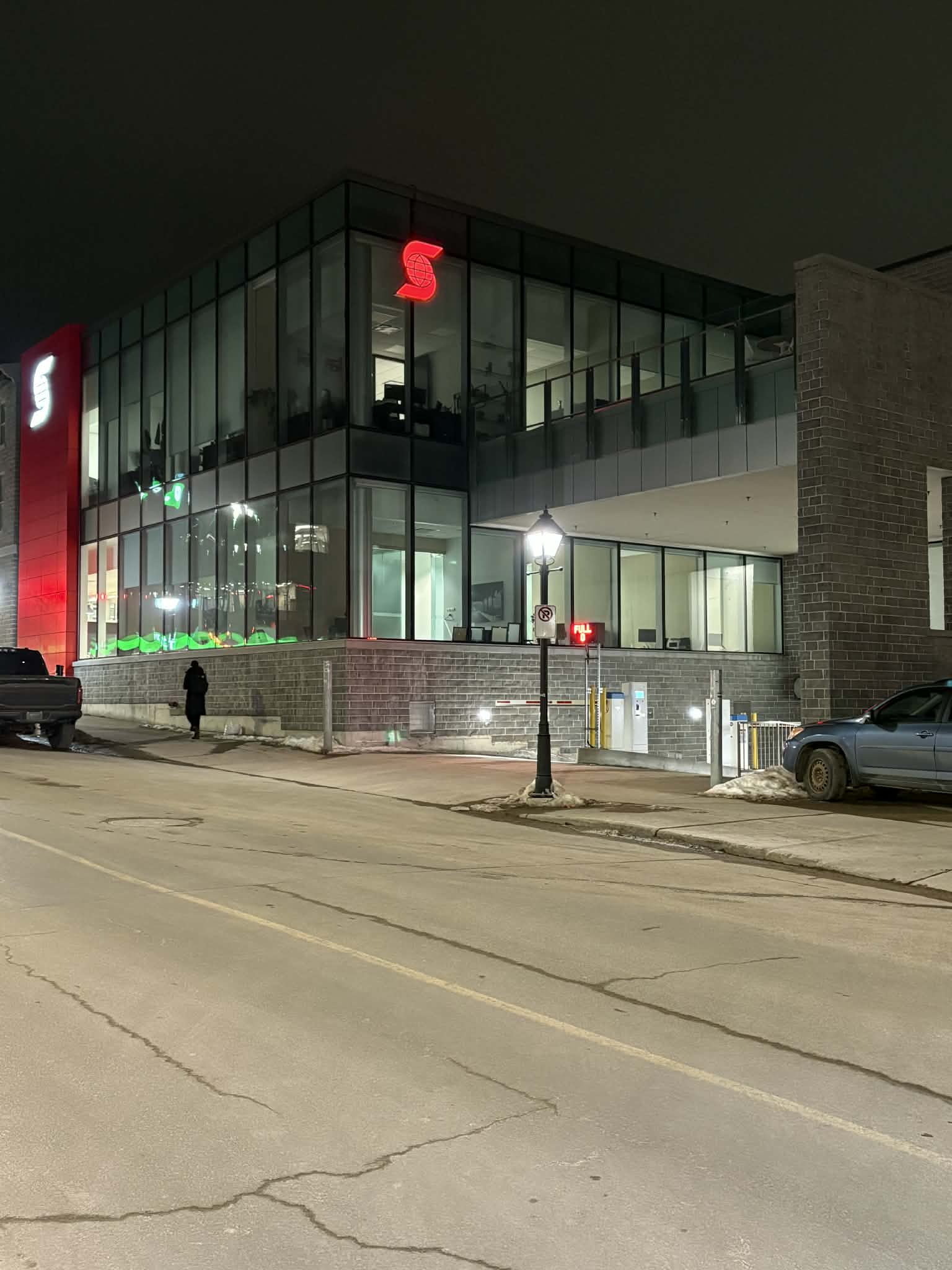
Send the site layout, camera models and rules to review. We will assess the available data, operator responsibilities and proposed workflow. Background: Lexoh parking installation at Scotiabank Kingston.
Plan the review system