
Only if the configured system issues that code for the intended access workflow and the scanner supports its format. A receipt code may serve another purpose, such as retrieving transaction information. Confirm the relationship between payment, code issuance, validity and the entrance response, then test the actual receipt instead of assuming that any readable QR code grants access.
Readers and credentials
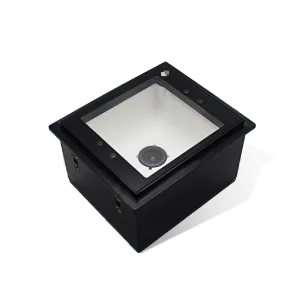
QR and 2D code scanner
A QR and 2D scanner reads a supported code presented at an entrance or kiosk. The connected access system checks the credential’s validity and permissions before deciding the response; the scanner does not issue access rights.
- Interaction
- Digital or printed code
- Decision
- Connected system
- Formats
- Selected scanner formats
Presentation matters
A code reader and a valid access credential are different things.
The scanner captures a supported QR or 2D code; the connected system evaluates the credential behind it. Plan the code source and validation rules along with the physical reader.
Phone screen or printed ticket?
Use only formats and presentation media supported by the selected scanner. Test the actual phone screens and printed documents at the mounting point, including glare, screen brightness, print quality and the angle available to the user.
Can a copied code be used again?
The scanner reads the presented code; reuse depends on the connected credential rules. If one-time use, expiry or cancellation is needed, configure and test those behaviors in the access system. Printing a QR code does not create those restrictions.
Make the result clear at the entrance
Separate unreadable codes from credentials that are read but refused. Define the feedback and assistance path for each case, then check that the approved scanner interface sends the expected information to the controller.
Printed and mobile codes
Make the code easy to present and read.
The scanner captures a supported code; the connected system evaluates what that code authorizes.
- Code format
- Use a symbology supported by the selected scanner and access system.
- Presentation
- Test paper and phone screens where those media are included, at the actual mounting position.
- Access result
- Expired, invalid and accepted codes need a defined response at the entrance.
Technical Characteristics
| Specification | Details |
|---|---|
| Scan Speed | Up to 100 scans/second |
| Reading Range | 5–50 cm (adjustable) |
| Barcode Types | QR, Code128, EAN, UPC, PDF417 |
| Data Buffer | 50 scans capacity |
| IP Rating | IP67 |
| Operating Temperature | -10°C to 50°C |
| Data Interface | Wiegand / RS-485 |
| Dimensions | 120 × 120 × 60 mm |
| Depth of Field | Optimal at 20–30 cm |
Equipment details
Read a code at the access point
The scanner reads the code presented by the user; it does not issue the credential. The connected system checks the code and determines the access response.
| Component or use | How it fits the system |
|---|---|
| On a phone | The code is presented on the screen at the reader. Screen brightness, reflections and presentation angle are part of the reading conditions. |
| On paper | The printed code is presented at the same interaction point. Print quality and the condition of the document affect what the scanner can read. |
| Code validation | The access system evaluates the credential behind the code, including its validity and permissions under the configured rules. |
| User feedback | The entrance workflow needs an understandable result after a scan and an assistance path if the code cannot be used. |
Configuration: Speed, reading distance, environmental rating, supported formats and integration behavior depend on the selected model.
Equipment questions
Practical details for planning, operating and maintaining this equipment.
Record the entrance, time, presentation medium and whether the scanner failed to read or the system refused a recognized credential. Use the approved transaction or credential reference to investigate validity and permissions. Avoid distributing an active access code unnecessarily; the useful evidence is the failure context and the corresponding system record, where available.
Project review
Add code reading to your entrance.
Share the approved code, medium, controller, mounting and access sequence for a configuration review.