


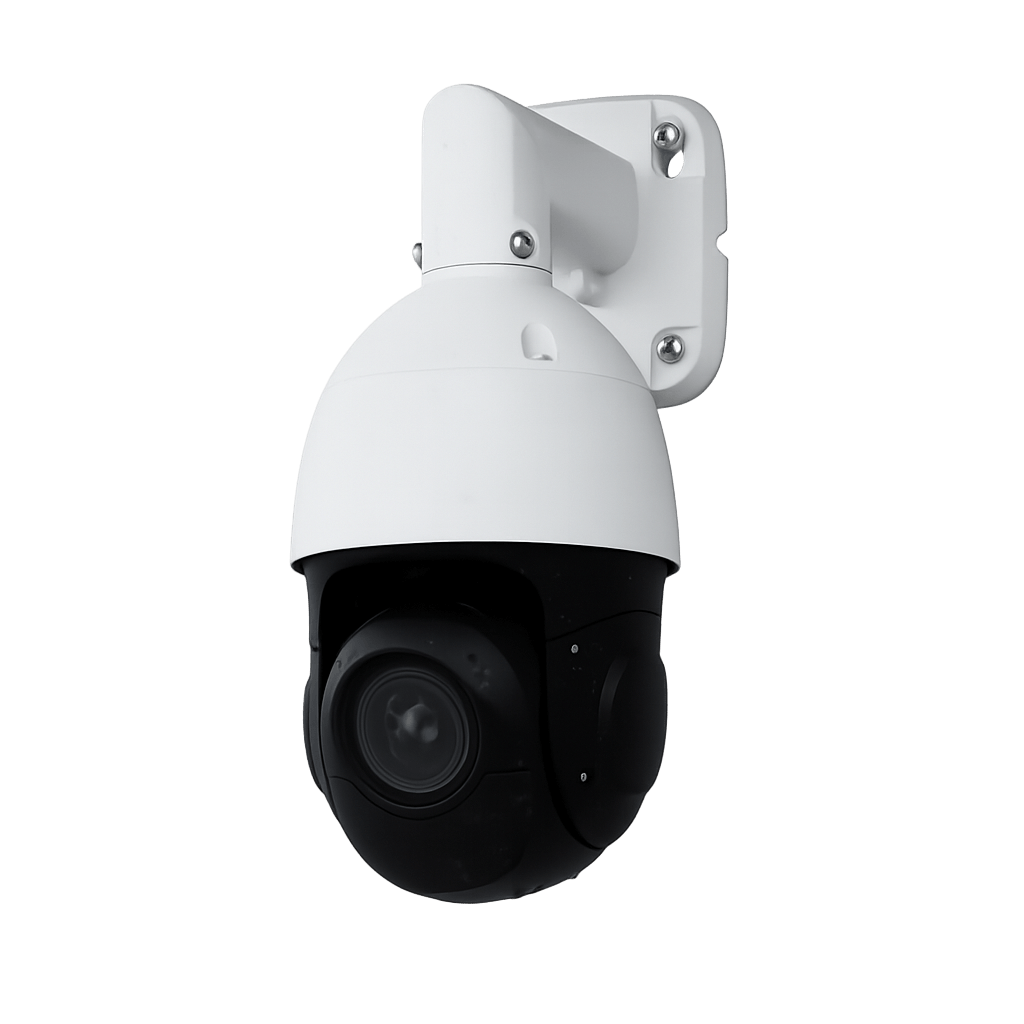
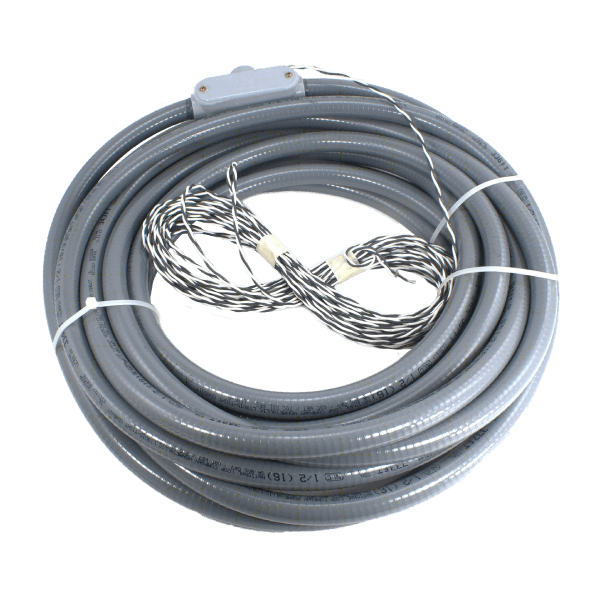
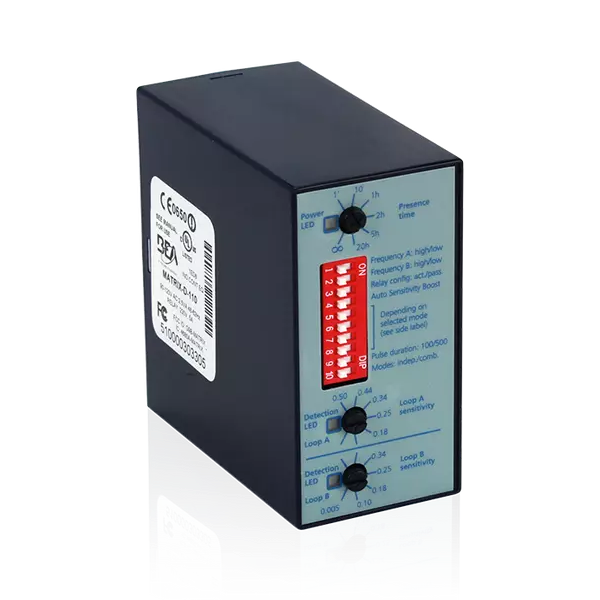
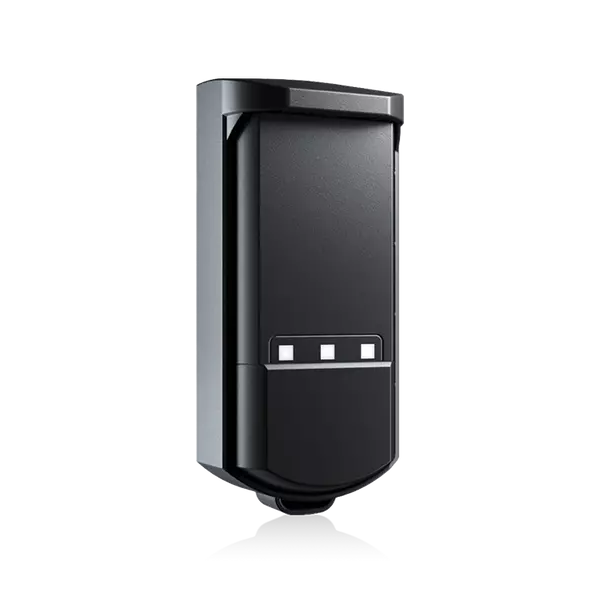
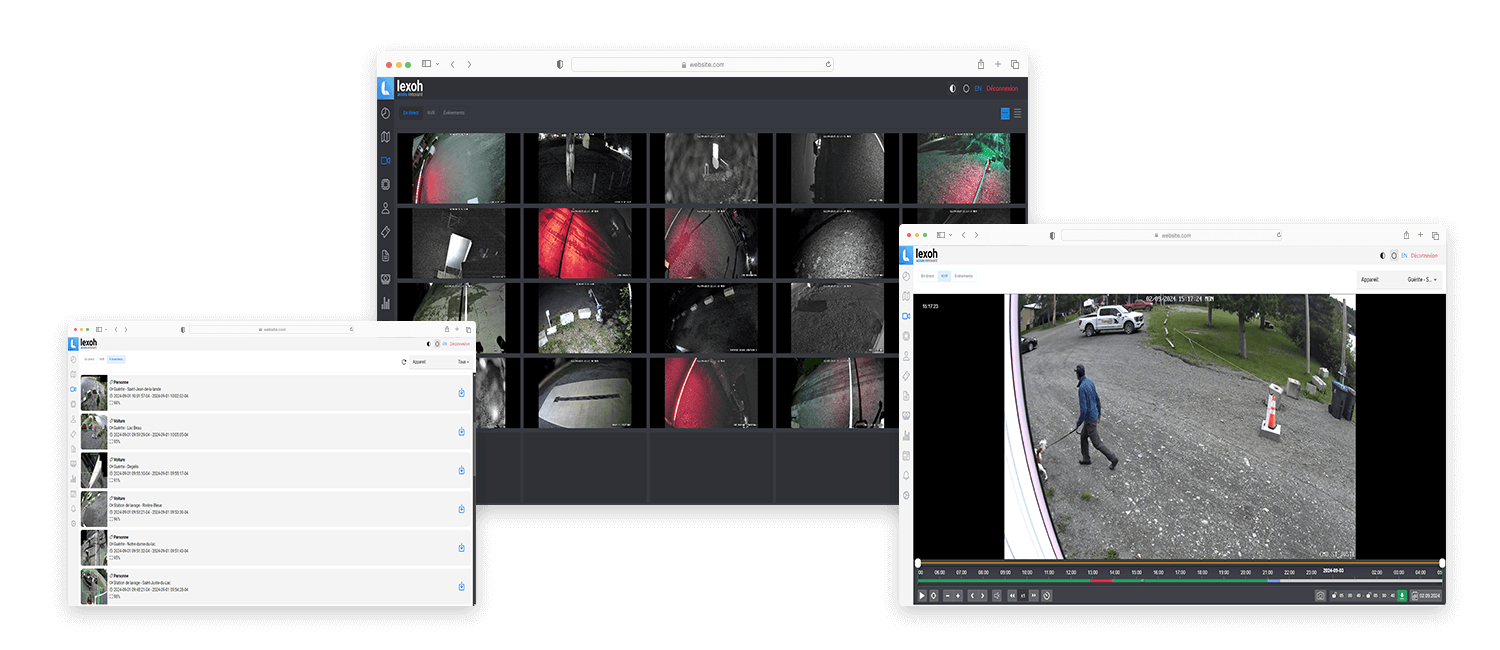
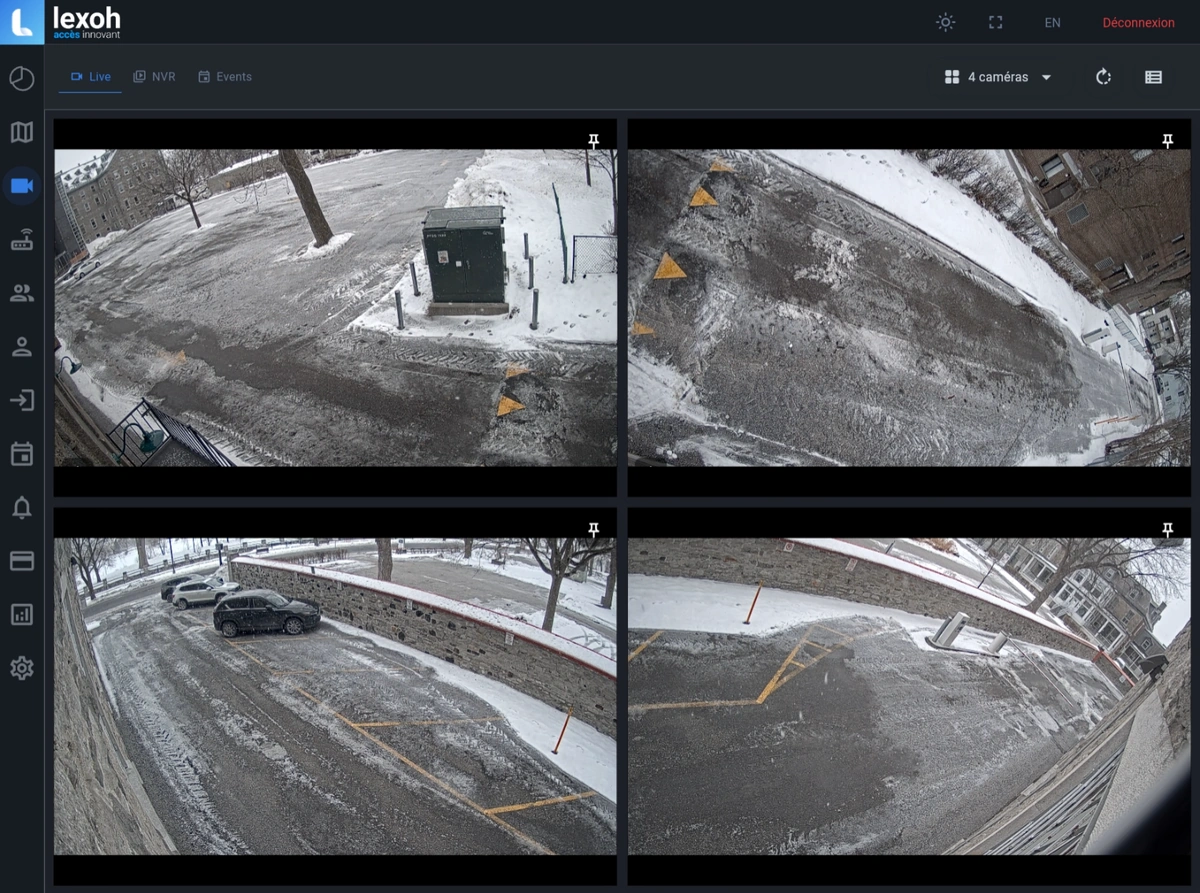
Keep approved examples of the actual entrance view under the lighting conditions used for acceptance. Record the camera reference, mounting position, field of view and the operational task each image supports. These references help the team recognize later changes in framing, obstructions or image quality; follow the site’s handling rules for any images containing people or vehicles.
Video security equipment
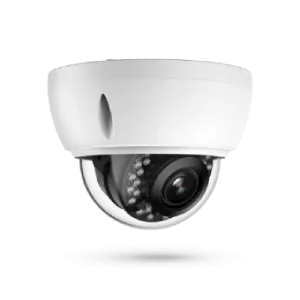
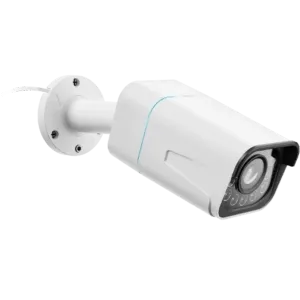
Bullet camera
A directional fixed camera keeps a defined approach or access point in view. Position and lens selection determine the scene it covers.
- Role
- Directed video viewpoint
- Form
- Bullet form factor
- Performance
- Model-specific specifications
View first
Keep a defined entrance or approach in view.
A bullet camera provides a fixed, directed view. Choose the lens and mounting position for the scene operators need to see, then confirm the recording and viewing setup.
Bullet, dome or PTZ?
Bullet and fixed dome cameras retain a selected viewpoint; their housing and mounting differ. A PTZ camera can change direction and framing. Choose fixed coverage when the entrance must remain visible while an operator examines another area.
Detail depends on the installed view
Resolution alone does not show how much detail a vehicle or person will occupy in the image. Compare lens coverage, subject distance, mounting angle and obstructions, then check the view with daylight, shadows and headlights.
Confirm recording and analytics separately
A camera supplies the image; the configured video system determines recording, retention and review. Confirm exact camera compatibility. Plate recognition or other analytics require supported functions and suitable installation conditions, not simply a bullet housing.
Fixed viewpoint
Keep the approach in view.
A directional fixed camera frames the approach or passage the operator needs to watch.
-
Frame the subject
Set the mounting position around the vehicle path and the required level of detail.
-
Check the image
Review obstructions, lighting and glare from the installed position.
-
Use the view
Live viewing and recorded review follow the connected video system’s configuration.
Technical Characteristics
| Specification | Details |
|---|---|
| Image Sensor | 1/2.8" 5 MP CMOS |
| Resolution | 2560 × 1920 (5 MP) |
| Frame Rate | 30 fps @ 5 MP |
| Lens | 2.8–12 mm Motorized Varifocal |
| IR Range | Up to 50 meters |
| IP Rating | IP67 |
| Temperature Range | -40°C to 60°C |
| Power | PoE+ (95 W) |
| Video Compression | H.265+/H.264 |
| Network | Gigabit Ethernet |
Equipment details
Placement and field of view
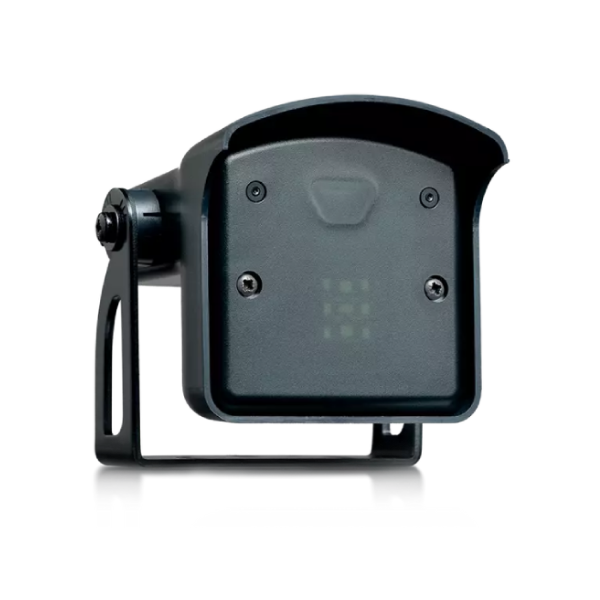
The elongated camera body makes the viewing direction visible. It suits a fixed view aimed at a defined approach or access point.
| Component or use | How it fits the system |
|---|---|
| Viewing direction | The mount aims the camera toward the scene. Lane position and obstacles determine which part of the approach remains visible. |
| Field of view | The lens and camera position determine the width of the scene and the detail available at the point of interest. |
| Day and night | The same fixed view must be assessed with changing light, shadows and vehicle headlights. |
| Monitoring | The image supplies a fixed reference view in the connected video system. Recording and review follow that system’s configuration. |
Configuration: Resolution, lens, zoom, frame rate, low-light performance, analytics, environmental ratings and compatibility depend on the selected camera.
Equipment questions
Practical details for planning, operating and maintaining this equipment.
Confirm that operators can identify the correct camera, lane and time period in the configured video and event systems. Check a representative event against its available footage and document how review is performed. A camera view alone does not establish automatic event linking, synchronized records or a particular retention period; verify those functions in the selected system.
Project review
Define the required view before choosing the camera.
Share the scenes, operator tasks, mounting conditions, lighting and video architecture for a project-specific review.